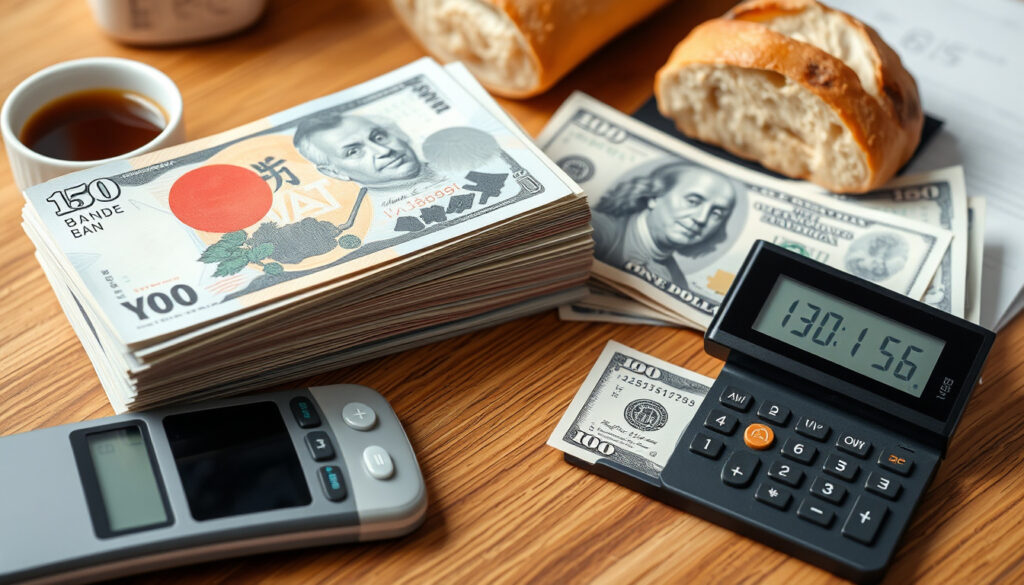
100,000 Yen to USD: Current Rate and Purchasing Power
If you’ve ever stared at a currency converter and wondered what 100,000 yen actually means beyond a number on the screen, you’re not alone. That amount — roughly $640 at current rates — is a common benchmark for travelers, remote workers, and investors trying to make sense of Japan’s economy and their own wallet.
100,000 JPY to USD: $640.53 | 1 USD to JPY: ¥154.20 | Highest banknote: ¥10,000
How much is 100,000 yen in US dollars?
The yen has been on a wild ride lately, and the relationship between the Japanese currency and the US dollar is anything but static. Currency markets move every minute, and a conversion that looks straightforward on paper gets complicated once you factor in bank margins, transfer fees, and the difference between a mid-market rate and what you’re actually quoted. We’ll break down the numbers from multiple sources, show you what the big converters say, and then give you something more useful: what those yen can actually buy once you’re standing in a Tokyo convenience store or paying a utility bill.
Snapshot: 1 JPY = 0.00640531 USD · Conversion: 100,000 JPY ≈ 640.53 USD · Mid-market vs. retail spread: typically 1–3% · Japan’s highest banknote: ¥10,000 (worth ~$64)
Key facts at a glance
- OFX lists 1 JPY = 0.006485 USD, putting 100,000 JPY at roughly $648.50 — OFX
- Currency.Wiki’s day-by-day table shows 100,000 JPY at 642.608 USD — Currency.Wiki
- Xe labels its rate as mid-market — the rate you see is rarely what you receive after fees or retail spread
- Revolut’s rate is based on live market data but adds a markup for certain transactions
- The Bank of Japan publishes daily foreign exchange rates covering the past seventy business days — Bank of Japan
- OFX lists an inverse rate of 154.200219 JPY per USD at its snapshot time (Bank of Japan)
Why the exact number keeps changing
Currency rates are not static numbers posted on a wall; they’re live instruments that shift every second as banks, funds, and individuals trade. The difference between 640 USD and 648 USD for the same 100,000 yen isn’t just a rounding issue — it reflects different snapshot times, different data feeds, and different business models. Xe’s live rate was captured at one moment, OFX’s at another, and Revolut’s at a third. None of them are “wrong,” but they’re all telling you something slightly different depending on when you look.
Xe explicitly labels its rate as mid-market — meaning it’s the wholesale rate between currencies, not the rate a consumer receives.
— Xe currency converter
The Bank of Japan provides the official daily rates, and its data is the closest thing to a government-backed benchmark you’ll find — Bank of Japan (central bank, official exchange rate data). The catch is that the BoJ reports rates for the previous business day, so even the official number is always a bit behind the live market. For anyone converting 100,000 yen today, that’s the difference between a historical reference and the number that actually lands in your account.
The spread between the mid-market rate and what you get quoted is where money quietly disappears. Banks and services typically add a margin on top of that mid-market rate, so a quoted 0.0064 might turn into 0.0063 once the spread is applied. On 100,000 yen, that’s a difference of $10 to $20 — not a fortune, but not nothing either, especially if you’re sending remittances regularly.
How much is 1 US dollar in yen?
OFX lists an inverse rate of 154.200219 JPY per USD at its snapshot time — meaning one dollar buys about 154 yen — OFX (foreign exchange broker, live inverse rate). That inverse rate is the one that matters for most Americans: it tells you how much yen you get per dollar, which is how you’d think about it if you’re traveling to Japan with dollars in your pocket.
Revolut’s converter uses live market data to give you a rate, but that rate does not include the transaction fee that may apply depending on your plan.
— Revolut support
The spread between the mid-market rate and what you actually get is where the real cost lives. For 100,000 yen, a service with a 0.5% fee and a tight spread will typically beat a bank with a 0% fee but a 3% spread.
Mid-market rate vs. what you actually get
The gap between the “headline” rate and the rate you receive is the single most important thing to understand about currency conversion. Every converter you’ll find — Xe, Revolut, OFX, Google — shows you something, but what they show isn’t the same thing. The mid-market rate is the theoretical midpoint between what buyers and sellers are trading at. The rate you get, meanwhile, includes a markup that the service uses to make money.
For 100,000 yen, the difference between a good rate and a bad one can be meaningful. At one end, a service with zero margin might give you $648. At the other, a bank with a 3% spread might give you $622. That’s a $26 difference on a single transaction — enough to notice if you’re converting a month’s rent or a significant purchase.
The practical takeaway: always look for the “mid-market” label, and never assume the number you see on screen is the number you’ll get. If you’re comparing services, ask what the all-in rate is after fees, not just the advertised rate.
How much is 100,000 yen in Japan?
The real value of 100,000 yen isn’t just about the dollar conversion — it’s about what that money does once you’re in Japan. For context, 100,000 yen is a significant amount in the Japanese economy. It’s equivalent to roughly 10% of the average monthly salary for a full-time worker, which means it carries real weight in everyday transactions.
- A week’s worth of groceries for one person: ¥8,000–12,000
- Monthly commuter pass in Tokyo: ¥10,000–15,000
- One night at a mid-range business hotel in Tokyo: ¥12,000–18,000
- Dinner for two at a local restaurant: ¥6,000–10,000
- Monthly mobile phone plan (1–3 GB): ¥3,000–6,000
So 100,000 yen covers roughly a month of groceries plus a commuting pass, or five or six hotel nights, or a solid month of everyday spending if you’re careful. The same amount, converted to $640, looks very different in the US — it might cover two nights at a decent hotel in a major city or a third of a month’s rent in a mid-sized apartment. The purchasing power shift is stark: 100,000 yen in Japan stretches further than $640 does in the US for many everyday expenses, particularly food and public transport.
Is the US dollar still strong against the Japanese yen?
The yen’s journey against the dollar over the past few years has been dramatic. The currency hit multi-decade lows in 2024, driven by the gap between Japan’s ultra-loose monetary policy and the Federal Reserve’s aggressive rate hikes. The Bank of Japan’s interest rate has been hovering at or near zero for years, while the Fed’s funds rate sits at a level that makes dollar-denominated assets attractive to yield-seeking investors — that dynamic pushes yen lower and dollars higher.
That’s why the same 100,000 yen that bought around $900 in early 2021 now buys only about $640. The yen has lost roughly a third of its dollar value in three years — a stunning slide that has reshaped how Japanese consumers and global investors think about the currency. The Bank of Japan publishes daily rates for the past seventy business days — Bank of Japan (daily FX statistics, seventy business days of data) — which gives you a clear window into recent trends without digging through archives.
How much is $1 million in yen?
At the current inverse rate of 154.20 JPY per USD, $1 million US dollars converts to approximately ¥154,200,000. That amount is significant in Japan — equivalent to a high annual salary for over a decade. This conversion is useful for investors or anyone dealing with large transfers, though the same spread and fee caveats apply: the actual yen received will be slightly less than the headline number.
How to convert 100,000 yen for the best rate
If you’re actually converting 100,000 yen, the method you choose matters as much as the headline rate. Banks typically offer the worst rates because they pad the spread heavily — you might get 2–4% less than the mid-market rate. Dedicated currency services like Wise and Revolut offer much closer to the mid-market rate but charge a small fee that becomes more reasonable as the amount grows.
- Check the live mid-market rate first — use Xe or Revolut to see where the rate sits today
- Compare the all-in rate, not just the headline — for 100,000 yen, a 2% spread difference equals roughly $13, so it’s worth shopping around
- Avoid airport exchange kiosks — they typically offer the worst rates because they know travelers with yen in hand are captive customers
- Consider timing — the Bank of Japan’s daily rate can shift a full yen against the dollar in a week, which moves your conversion by several dollars
If you’re converting a larger sum — say, several hundred thousand yen — the fee structure shifts. Services that charge a flat fee become more attractive, while those that take a percentage bite become less appealing. For 100,000 yen, a service with a 0.5% fee and a tight spread will typically beat a bank with a 0% fee but a 3% spread — because the spread is where the real cost lives.
wise.com, boj.or.jp, myfin.us, xe.com, jpy.currencyrate.today, moneyconvert.net, ex-rate.com
Frequently asked questions
Is 100,000 yen a lot of money in Japan?
Yes, 100,000 yen is a meaningful amount. It’s roughly 10% of the average full-time monthly salary in Japan, covering a month of groceries and a commuter pass, or several nights of decent accommodation in a major city.
What is the highest yen banknote?
The highest denomination banknote in Japan is the ¥10,000 note. At current rates, one ¥10,000 note is worth about $64, so 100,000 yen equals ten of these bills.
What is the Bank of Japan’s interest rate?
The Bank of Japan’s interest rate has been at or near zero for years, part of its ultra-loose monetary policy. This is a key factor in the yen’s weakness against the dollar, since US rates are significantly higher.
What is the Fed funds rate?
The Federal Reserve’s benchmark interest rate sits at a level well above Japan’s, which pushes investors toward dollar-denominated assets. That rate differential is the main driver of the yen-dollar exchange rate.
Why do different converters show different rates for 100,000 yen?
Each service uses a slightly different data feed, updates rates at different intervals, and may add its own spread or fee. Xe, Revolut, OFX, and Currency.Wiki all gave slightly different numbers in the same snapshot window.
What is the mid-market rate?
The mid-market rate is the theoretical midpoint between what buyers and sellers are trading at in the wholesale currency market. It’s the rate converters show, but not the rate you receive — services add a margin on top of it.
What is 1 USD to JPY right now?
OFX lists the inverse rate at 154.200219 JPY per USD, meaning one dollar buys about 154 yen. This is the rate that matters for Americans converting dollars into yen.
How often do exchange rates update?
Currency rates update every minute during market hours. The Bank of Japan publishes daily rates for the previous seventy business days, but live converters reflect real-time market movements.
The implication: Exchange rates vary by source and timing, so always verify the specific rate you’ll receive before making a transaction. This variability means that a small difference in spread can add up to real dollars on larger amounts.
More related posts
 Car Key Replacement Near Me: Cost, DIY & Cheapest Options
 The Ordinary Niacinamide 10% + Zinc 1% Reviews: Real Results
 1883 (TV Series) – Yellowstone Prequel Guide Cast Plot Episodes
 Amazon Drop Off Near Me: Free Return Locations & Lockers
 Power Book IV Force Episodes: Full List & Season Guide
 Landman Season 2 Release Date: Schedule & How to Watch
 Labubu Where to Buy in Ireland: Official Retailers & Authenticity
 10 Things I Hate About You: Poem, Cast & Friendship