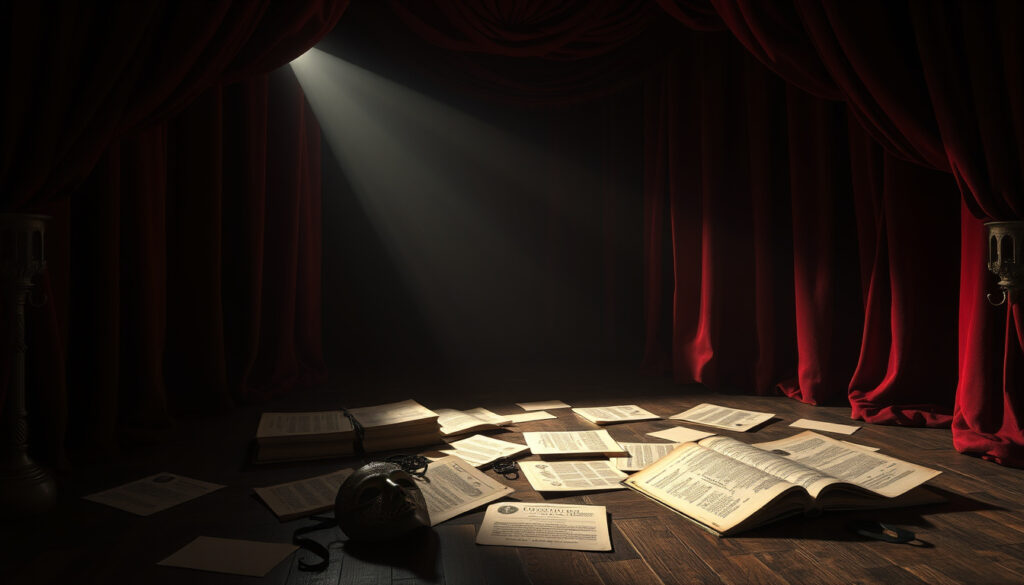
If We Were Villains – Plot Summary, Characters and Ending Guide
If We Were Villains is a 2017 dark academia thriller by M.L. Rio, following seven Shakespeare-obsessed acting students at an elite conservatory whose final year ends in murder. Framed as a confession told to police after a decade in prison, the novel weaves campus drama, forbidden romance, and mystery into a story that forces readers to question what it means to be guilty—or innocent.
Published by Flatiron Books on April 11, 2017, the debut novel quickly became a staple of the dark academia genre, finding renewed popularity through BookTok in 2020. The story draws inspiration from Shakespeare’s King Lear and Titus Andronicus, using theatrical performance as both a backdrop and a metaphor for the masks people wear to survive.
This guide covers the complete plot, character breakdowns, ending analysis, adaptation status, and everything readers need to know before diving into this twisting psychological thriller.
What is If We Were Villains about?
Set at the fictional Dellecher Classical Conservatory during the students’ fourth and final year, If We Were Villains centers on a tight-knit group of seven actors: Oliver Marks, James Farrow, Richard, Meredith, Filippa, Alexander, and Wren. Immersed in rigorous Shakespearean productions, these students live and breathe classical theatre—but the pressures of competition, jealousy, and unspoken desires create dangerous fault lines beneath their artistic pursuits.
Richard serves as the group’s de facto leader, a charismatic but increasingly abusive figure who uses his position to intimidate and control others. His behavior escalates throughout the year, including physical violence during stage combat rehearsals, targeted bullying of James over his feelings for Oliver, and possessive control over Meredith.
Main plot overview
The central conflict ignites at a cast party following their production of Julius Caesar. After Richard assaults a cellist who was flirting with Meredith and then physically attacks Meredith herself, Oliver sleeps with Meredith while Richard rages outside. The violence reaches its breaking point when the group discovers Richard battered by the lake, still alive but unable to save himself.
Rather than seeking help, Oliver, James, Meredith, Filippa, Alexander, and Wren make a fateful decision: they let Richard die, staging the scene to appear accidental. The guilt of this choice begins to tear the group apart during subsequent rehearsals for King Lear.
During preparations for the production, Oliver discovers a bloodstained boathook hidden in James’s mattress along with a torn shirt fragment. This evidence reveals that James struck Richard in self-defense at the dock following a homophobic confrontation—the killing was not deliberate murder but a response to violence. Filippa had helped cover up the crime by burning James’s shirt.
On opening night of King Lear, James publicly kisses Oliver during Edmund’s death scene—a moment that shatters whatever remains of their careful pretense. Unable to bear the weight of the secret, Oliver confesses to the murder to protect James. He is convicted of second-degree murder and serves a 10-year sentence.
The novel’s title refers to a line from Shakespeare’s Julius Caesar: “The fault, dear Brutus, is not in our stars, but in ourselves, that we are underlings.” The characters are not destined villains—they become them through accumulated choices.
Key characters breakdown
- Oliver Marks: The narrator and unreliable storyteller, Oliver serves as the everyman protagonist who ultimately takes the fall to protect James. His deep, complex bond with James forms the emotional core of the novel.
- James Farrow: Oliver’s intense best friend, James is tormented by unrequited romantic love for Oliver. He kills Richard in self-defense after the confrontation at the dock and later drowns himself in 2003.
- Richard: Portrayed as both Macbeth and Titus Andronicus during productions, Richard is the charismatic but abusive leader whose tyranny drives the tragedy. He becomes the murder victim despite—or because of—his cruelty.
- Meredith: Richard’s girlfriend who sleeps with Oliver during the chaos of the cast party. She later contacts Detective Colborne, playing a pivotal role in the investigation’s reopening.
- Filippa: An acrobatic actress who aids James in covering up the killing by burning his shirt. She remains the most loyal to James throughout, eventually revealing the truth about his death.
- Alexander: A drug-using student who provides comic relief. He first suggests the group let Richard die when they find him injured by the lake.
- Wren: The quietest member of the group, Wren develops feelings for James as events unfold.
Each major character in the novel is assigned Shakespearean roles during productions, and these assignments reflect their personalities and fates. Richard consistently plays villains—Macbeth and Titus—while Oliver often portrays more morally ambiguous characters.
| Snapshot Fact | Details |
|---|---|
| Pages | 368 |
| Publisher | Flatiron Books |
| ISBN | 978-1250095288 |
| Setting | 1990s Dellecher Classical Conservatory |
| Narrative frame | Oliver recounts events to Detective Colborne in 2007 |
| Primary influences | King Lear, Titus Andronicus, Julius Caesar |
Who wrote If We Were Villains and what’s the background?
M.L. Rio is the pen name of Maren Thomas Lefko, an American author whose debut novel became an unexpected dark academia phenomenon. Released in April 2017 by Flatiron Books, the novel drew from Rio’s apparent familiarity with competitive theatre programs, creating an environment that mirrors elite conservatories like Juilliard in its intensity and psychological pressure.
Author M.L. Rio profile
Little public information exists about M.L. Rio beyond the book itself, a deliberate choice that has contributed to the author’s mystique. What is known is that If We Were Villains represents a distinctive entry into the literary landscape, combining classical theatre references with contemporary thriller pacing.
Rio has indicated in Goodreads Q&A interactions that the novel’s ending was intentionally designed to leave readers uncertain about certain fates, suggesting the author values ambiguity as a storytelling tool rather than a flaw to be resolved. You can learn more about the author through M.L. Rio’s official website.
Publication history
The novel debuted with modest initial sales but found its audience through word of mouth and later social media discovery. By 2020, BookTok creators began sharing the book, propelling it back onto bestseller lists and introducing it to a new generation of readers drawn to its dark academia aesthetics.
According to Penguin Random House, the publisher has continued to support the title, maintaining its availability as an enduring backlist favorite rather than pursuing aggressive new marketing campaigns.
- Shakespearean dialogue and plots directly parallel the characters’ lives and fates
- The conservatory setting creates pressure-cooker conditions where art and violence intersect
- Oliver functions as an unreliable narrator whose account cannot be fully trusted
- Queer desire runs beneath the surface, often as a catalyst for conflict
- Guilt and complicity prove more destructive than the original crime
- Performance and authenticity become impossible to distinguish
- No character emerges as purely innocent or guilty
Is If We Were Villains becoming a movie?
Film rights for If We Were Villains were acquired by Universal Pictures in 2021, generating significant excitement among readers who hoped to see the theatrical world of Dellecher brought to screen. However, as of 2025, no confirmed adaptation has moved into active production.
Adaptation status update
Reports indicate that Universal secured the rights shortly after the novel’s BookTok resurgence, suggesting studios recognized the book’s built-in audience and visual storytelling potential. The theatrical setting, ensemble cast, and dramatic lighting that characterize the novel would translate effectively to film.
No director, writer, cast announcements, or release timeline have been officially confirmed. This silence does not necessarily indicate the project has been abandoned—film rights often remain in development limbo for years before production begins—but readers should not expect imminent news.
Production details
The IMDB listing for If We Were Villains exists but contains no crew or cast information, further suggesting the adaptation remains in early development stages or has been temporarily shelved.
Given the novel’s complex timeline, ensemble cast, and theatrical sequences requiring choreographed stage combat and period-appropriate production numbers, any adaptation would require substantial pre-production investment. A prestige television format might better serve the source material, allowing for deeper character exploration and multiple production sequences.
No confirmed adaptation exists as of 2025. Film rights are held by Universal Pictures but no production timeline, casting, or release date has been announced. Readers seeking updates should monitor verified industry sources rather than rumor-based speculation.
If We Were Villains ending explained
The novel’s ending operates on multiple levels of revelation and ambiguity, rewarding attentive readers while deliberately withholding complete certainty about several key events.
Spoiler-free summary
The narrative frame closes when Oliver, released from prison in 2007 after serving his full sentence, meets with Detective Colborne to tell his story. Through his confession, readers learn that Oliver lied during his original trial—James, not Oliver, killed Richard. James struck Richard during a confrontation at the docks after Richard’s homophobic taunting became physically threatening.
The group discovered Richard injured but alive and chose collective inaction, staging his death as an accident. This complicity bound all seven students to a terrible secret, and when Oliver discovers the truth about James, he chooses to protect his friend by confessing to a crime he did not commit.
Key twists revealed
Filippa provides the most devastating revelation: James, unable to live with his guilt, drowned himself in 2003 while still in prison. He stopped accepting visitors—including Filippa—in the weeks leading up to his death, suggesting a deliberate withdrawal from the world.
The novel’s final pages introduce profound ambiguity. Oliver, anticipating his parole, considers that James may not actually be dead. The possibility exists that James escaped, assumed a new identity, and has been watching Oliver’s release from a distance. This reading suggests James orchestrated events to protect Oliver, or perhaps that James survived and has been observing from outside.
Oliver moves in with Meredith, rekindling their connection in the aftermath of revelation. The book’s final image—Oliver looking toward the door, expecting James—leaves readers uncertain whether this represents hope, delusion, or something else entirely. You can explore alternative interpretations of the ending at CrewFiction.
The author has confirmed that the ambiguity was intentional. Multiple readings are valid: James died by suicide as stated, James faked his death and relocated, or Oliver’s expectation represents psychological projection rather than reality. No single interpretation is incorrect.
Key events in If We Were Villains timeline
Understanding the chronological sequence of events clarifies some of the novel’s more complex narrative shifts between past and present timelines.
- 1990s: Oliver, James, Richard, Meredith, Filippa, Alexander, and Wren begin their final year at Dellecher Classical Conservatory.
- Cast party for Julius Caesar: Richard’s abuse escalates; Oliver sleeps with Meredith; tensions reach breaking point.
- Dock confrontation: James kills Richard in self-defense during a homophobic attack; Filippa helps cover up the crime.
- Group decision: The seven students discover Richard injured and choose to let him die, staging the scene.
- King Lear rehearsals: Oliver discovers evidence of James’s guilt; secrets begin unraveling.
- Opening night: James kisses Oliver onstage; Oliver confesses to the murder.
- Trial and conviction: Oliver is sentenced to 10 years for second-degree murder.
- 2003: James drowns himself in prison; Filippa is among his last visitors.
- 2007: Oliver is released on parole; he meets with Colborne and tells his story.
What the novel confirms versus what remains uncertain
Readers frequently express confusion about which plot points are definitively established and which remain deliberately ambiguous. This distinction helps frame expectations for a first reading.
| Established information | Information that remains unclear |
|---|---|
| Richard’s abusive behavior throughout the final year | Whether James actually died or faked his death |
| James killed Richard in self-defense at the dock | Oliver’s reliability as narrator—how much is truth versus performance |
| The group collectively chose to let Richard die | Whether Filippa’s account of James’s drowning is accurate |
| Oliver confessed to protect James and served 10 years | What exactly happened during the dock confrontation |
| James kissed Oliver onstage during King Lear | Whether the other characters (Alexander, Wren) knew more than they revealed |
| Meredith contacted Colborne to reopen the investigation | The true nature of James and Oliver’s relationship before the murder |
The Goodreads Q&A confirms that the author designed the ambiguity intentionally, prioritizing thematic resonance over plot resolution.
The Dellecher Classical Conservatory setting
The fictional Dellecher Classical Conservatory serves as both setting and metaphor throughout the novel. Modeled loosely on elite real-world institutions like Juilliard, the school represents an environment where artistic ambition and psychological intensity become indistinguishable from one another.
Students at Dellecher focus exclusively on classical roles—Shakespeare above all—and the production requirements demand physical and emotional authenticity that blurs the boundary between performance and reality. Stage combat training, for instance, becomes a site where Richard’s violence toward James can hide in plain sight as legitimate theatrical technique.
The conservatory’s insularity creates conditions where a small group can maintain secrets for years without external oversight. With faculty and administration apparently removed from daily student life, the seven actors exist in a pressure-cooker environment where adult supervision feels absent and consequences delayed.
This setting allows Rio to explore themes of identity and performance: when every waking hour involves embodying classical characters, when does the mask become the face? The novel suggests that Dellecher produces not just trained actors but people who have forgotten how to exist without an audience—a dangerous condition when violence enters the equation.
Critical reception and key quotes
Reviews of If We Were Villains praise the novel’s structural ambition and atmospheric writing while noting its deliberately challenging nature. According to sources including The Boar, the book “plays with expectations” and proves “cruel on the reader” in ways that serve the story’s themes of betrayal and moral ambiguity.
“Every character has their secrets and none are truly the innocents.”
— Review commentary on thematic elements, The Boar
“From peaceful to hurt and vengeful”—James’s emotional shifts highlight the novel’s exploration of how environments shape and warp emotional expression.
— Analysis of character dynamics, Better World With Design
Community reception on Goodreads shows an average rating of approximately 4.1 out of 5, with readers praising the dark academia atmosphere, Shakespeare integration, and twist-laden plot. Critical assessments note that the ambiguous ending frustrates some readers seeking resolution, though others celebrate the deliberate uncertainty.
BookTok creators have contributed to the novel’s enduring popularity by emphasizing its visual and emotional aesthetics—theatrical costumes, candlelit scenes, and the tension between performance and authenticity play particularly well in short-form video format.
Should you read If We Were Villains?
If We Were Villains rewards readers who appreciate dark academia, psychological thrillers, and stories that refuse easy resolution. The novel works best for those who enjoy being challenged rather than simply entertained—who appreciate when a story lingers after the final page.
The book demands a certain tolerance for ambiguity and morally compromised characters. No protagonist emerges unscathed, and the narrative offers no traditional hero to root for. Readers seeking clear-cut may find the novel frustrating, but those who value complexity will discover rich material for discussion.
The Shakespearean elements prove accessible even for readers without deep familiarity with the plays—Rio integrates references naturally rather than requiring prior knowledge. The theatrical setting will resonate particularly with readers who have experienced competitive arts environments, though the psychological dynamics translate broadly.
For those exploring similar territory, dark academia classics like The Secret History by Donna Tartt share DNA with Rio’s debut, while Shakespeare-inspired contemporaries such as These Violent Delights by Chloe Gong offer related thematic territory. You might also enjoy exploring how performance and identity intersect in other mediums, such as films in the Kiss Kiss Bang Bang tradition.
As of 2025, no sequel has been announced, and readers should temper expectations for additional entries in the series. M.L. Rio has published no further novels, suggesting If We Were Villains remains a standalone work rather than the beginning of a larger universe.
Frequently asked questions
Is If We Were Villains based on true events?
No confirmed basis in real events exists. The novel is a work of fiction, though the competitive theatre environment reflects real-world programs like Juilliard. The author has not confirmed any direct real-world inspiration.
Best quotes from If We Were Villains
The novel emphasizes thematic quotes about performance, identity, and complicity rather than memorable one-liners. Key passages explore how characters “become” their roles and how guilt accumulates through collective inaction.
If We Were Villains review and rating
The novel holds approximately 4.1 stars on Goodreads based on hundreds of thousands of ratings. Reviews praise the atmosphere, writing, and twists while noting the challenging ambiguity of the ending.
Similar books to If We Were Villains
Comparable titles include The Secret History by Donna Tartt (elite group dynamics, murder), These Violent Delights by Chloe Gong (Shakespeare inspiration), and Ninth House by Leigh Bardugo (dark academia with occult elements).
What happened to James in If We Were Villains?
James killed Richard in self-defense and served prison time. According to Filippa, James drowned himself in 2003 due to guilt. However, the novel leaves open the possibility that James faked his death and escaped, with Oliver anticipating seeing him in the final pages.
Who is the narrator of If We Were Villains?
Oliver Marks narrates the novel, recounting events to Detective Colborne after his 2007 parole. His account cannot be fully trusted—Rio deliberately leaves unclear how much he reveals truthfully versus how much he performs.
Is there a movie or TV adaptation?
Universal Pictures acquired film rights in 2021, but no confirmed production has been announced. An adaptation listing exists on IMDB without cast or crew information. For readers curious about how adaptations handle similar material, Tell Me Lies Season 4 demonstrates how complex source material can be translated to screen.
More related posts
 Can Cats Get COVID? CDC & Mayo Clinic Facts on Risks
 Landman Season 2 Release Date: Schedule & How to Watch
 What Is an IP Address? Simple Explanation & Privacy Risks
 Best Buy Black Friday Deals – Start Times, Top Picks & Price Guide
 T-Mobile Customer Perk Change: Ending Perks, Adding New Ones
 When Is the First Day of Spring? 2026 Dates & Traditions
 1000 Free Games to Play: Best Platforms & Tips for 2026
 30-60-90 Triangle: Complete Guide to Rules and Calculations