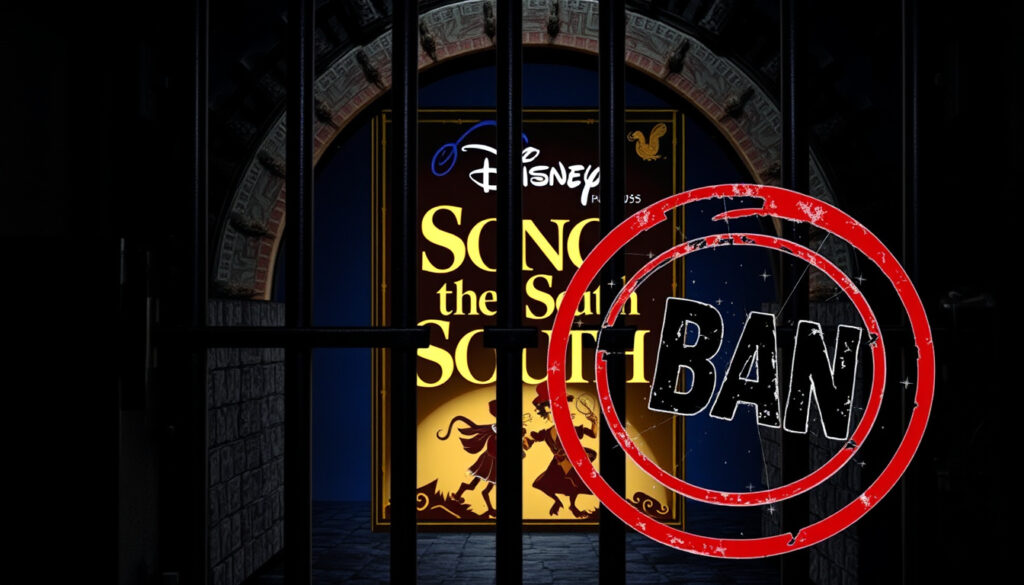
Song of the South: Controversy, Disney Ban & Where to Watch Explained
Few Disney films carry the baggage that Song of the South does. Released in 1946, it became one of the studio’s most controversial productions—and it’s been effectively erased from American distribution ever since. Yet the movie hasn’t disappeared entirely. A 4K restoration sits on the Internet Archive, and international DVDs still surface online. The question is why Disney pulled the plug, and whether anything has actually changed.
Release Year: 1946 · Directors: Harve Foster, Wilfred Jackson · Producer: Walt Disney · Runtime: 94 minutes · Top Platform: Internet Archive (4K Restoration)
Quick snapshot
- 1946 live-action/animation hybrid (Internet Archive)
- No US home video since 1986 withdrawal (Wikipedia)
- Splash Mountain rethemed in 2020 over racism concerns (Syfy Wire)
- Whether March 2026 “unban” reports are accurate (Inside the Magic)
- Official Disney stance on future US streaming (Wikipedia)
- Exact legal status in non-US markets (Syfy Wire)
- Disney has confirmed no US streaming plans
- Br’er Rabbit characters still on 1955 Disneyland map prop
- Public domain status awaits 2042 copyright expiry
The key facts below provide a quick-reference overview of the film’s specifications and availability status.
| Key Fact | Detail |
|---|---|
| Release Date | November 12, 1946 |
| Director(s) | Harve Foster, Wilfred Jackson |
| Starring | James Baskett, Bobby Driscoll |
| Genre | Musical drama |
| Notable Song | Zip-a-Dee-Doo-Dah (Oscar winner) |
| Last US Release | 1986 |
| Disney+ Availability | Not available |
| Public Domain | 2042 |
What is the controversial Song of the South?
Song of the South is a 1946 Disney musical drama that blends live-action sequences with animated segments. The film adapts Joel Chandler Harris’s Uncle Remus stories, following a young boy visiting his grandmother’s Georgia plantation and befriending the farmhand Uncle Remus, who tells him tales of Br’er Rabbit and his adventures. James Baskett earned an Academy Award for his portrayal of Uncle Remus, and the film’s signature song, Zip-a-Dee-Doo-Dah, won Best Original Song.
The same film that produced an Oscar-winning song has been condemned as racially offensive since its premiere in 1946.
Plot summary
The narrative centers on young Johnny (Bobby Driscoll), whose family has moved to a Georgia plantation. His mother recovers from illness while his absent father works elsewhere. Uncle Remus (James Baskett) becomes Johnny’s companion and storyteller, sharing Br’er Rabbit folktales through animated sequences. The stories caution Johnny against mischief, but plantation life is depicted through a lens that critics say romanticizes the antebellum South and perpetuates racist stereotypes of African Americans.
Production background
Walt Disney produced the film with directors Harve Foster and Wilfred Jackson. It marked a technical experiment—mixing live-action and animation decades before Who Framed Roger Rabbit. The film originally screened on Disney Channel television in the US, but never received a home video release domestically. Four theatrical re-releases followed the 1946 debut (1956, 1972, 1980, 1986), before Disney halted US distribution entirely.
Uncle Remus stories
The animated Br’er Rabbit segments draw from Harris’s 19th-century folk tale collection. These stories became controversial for how they portrayed Black characters through the lens of minstrel traditions. Harris himself had written in a dialect that critics argue reinforced harmful stereotypes, and Disney’s film carried those same elements into the mid-20th century.
Where can I watch Disney Song of the South?
For US audiences, legal options remain extremely limited. Disney has never released the film on home video in the United States, and it remains absent from Disney+ despite the platform launching in 2019 with near-complete catalog access. Several unofficial channels exist, though they operate in murky legal territory.
Streaming options
Major US streaming platforms—Netflix, Amazon Prime Video, Hulu, HBO Max, and Disney+—do not carry Song of the South. Disney’s official position, stated repeatedly by former CEO Bob Iger, is that the film is “not appropriate for today’s world” and will not be added to Disney+.
Purchase and DVD
No US DVD or Blu-ray release exists from Disney or any licensed distributor. Region-encoded DVDs surface through European and Asian retailers, and these international editions occasionally appear on marketplace sites. The Internet Archive hosts a 4K restoration sourced from overseas materials, though the upload exists outside official Disney channels.
Legal availability
The distinction matters: Song of the South is not legally banned in the US. No court or government body has prohibited it. Disney made a voluntary corporate decision to withdraw the film after 1986 and has maintained that position for four decades. This voluntary suppression is what keeps the film out of circulation, not any legal prohibition.
Why did Disney remove Song of the South?
Disney’s decision to withdraw Song of the South stems from persistent criticism of the film’s portrayal of African Americans and plantation life. Critics have long argued that the movie romanticizes slavery-era relationships and relies on racist characterizations that were already considered offensive by the 1940s.
Racism allegations
The film has faced criticism since its 1946 release for depicting Happy Plantation life through an Uncle Tom-like character and using animated sequences that drew from minstrel traditions. The Guardian has described the film as carrying “insidious racism” that serves as a reminder of darker periods in American culture. African American advocacy groups and film historians have repeatedly called the content harmful.
Historical context
Disney has attempted to distance itself from the film progressively. After four theatrical re-releases between 1956 and 1986, the company stopped scheduling US screenings. In March 2010, CEO Bob Iger stated the film was “fairly offensive [and] antiquated” with no plans for home release. By 2020, Iger confirmed to shareholders that Disney+ would include the entire catalog “except Song of the South, deemed ‘fairly offensive.'” That same year, Disney announced it would retheme the Splash Mountain attraction—a park feature directly inspired by the film—due to ongoing concerns.
Re-release attempts
Internal discussions about the film’s future have surfaced publicly. In November 2010, Disney creative director Dave Bossert told interviewers that “there’s been a lot of internal discussion about Song of the South. And at some point we’re going to do something about it.” That announcement never translated into action, and Bossert’s statement remains the most optimistic official word on potential re-release—though no concrete plans have followed.
Can you still see Song of the South?
Yes, though accessing the film requires effort and tolerance for ambiguity. No legitimate US streaming or purchase option exists, but the film hasn’t vanished entirely. International releases and unauthorized digital copies provide practical access for determined viewers.
Unofficial sources
The Internet Archive hosts a 4K restoration of the film, uploaded without Disney authorization. This copy is technically high-quality and represents the best public domain access point, but it exists outside licensed channels. YouTube and various file-sharing platforms also host copies of varying quality.
International releases
European and Asian home video releases did exist on VHS and LaserDisc before the 1986 withdrawal. These regional releases occasionally surface through international marketplace sellers. Collectors who preserved these editions have kept copies circulating, and DVD preservations from these materials appear at specialty retailers. Whether these copies are legally importable to the US remains unclear—region encoding complicates the question.
Fan restorations
A 4K restoration sourced from international materials appeared on the Internet Archive in 2024. This represents the highest-quality version most viewers can access without traveling to a special collection. Fan preservation efforts have maintained copies for decades, ensuring the film remains viewable despite Disney’s suppression policy.
Song of the South cast and legacy
The film’s cast headed by James Baskett, who received an Academy Award for his performance as Uncle Remus—the first male actor of African descent to receive an Oscar. Bobby Driscoll played young Johnny, and other notable cast members include ZaSu Pitts, Ruth Roman, and Lucile Watson.
Main actors
James Baskett’s Oscar win stands as the film’s most significant achievement. The recognition was groundbreaking for the era, though it was also complicated—the role required him to perform in a character type that many now recognize as harmful. Baskett navigated these constraints with dignity, according to historical accounts, but the role itself has been reanalyzed critically since.
Zip a Dee Doo Dah impact
Ironically, the film’s greatest legacy is a song that has become one of Disney’s most recognized tunes. Zip-a-Dee-Doo-Dah won the Academy Award for Best Original Song in 1947 and remains a cultural touchstone. The song appears in park attractions, compilations, and anniversary celebrations without reference to its source film—a deliberate decoupling that Disney has encouraged.
Cultural footprint
Song of the South’s influence persists through several channels. The Splash Mountain theme park attraction in Disney Parks drew directly from the film until its 2024 closure and retheme to Princess and the Frog’s Tiana’s Bayou Adventure. Br’er Rabbit, Br’er Bear, and Br’er Fox characters remain on a 1955 Disneyland map prop at Disney’s Hollywood Studios, though one Song of the South reference was removed from the Walt Disney Presents exhibit in 2024. The ongoing tension between park heritage and cultural sensitivity defines the film’s current footprint.
For Disney, Song of the South represents a decades-long reputational liability that continues generating controversy even as the company removes references from parks. The film enters US public domain in 2042, when copyright expires—potentially ending Disney’s control over its cultural fate.
The picture on the ground
Song of the South occupies an unusual position in American cultural history: a commercially suppressed film that remains technically viewable, a corporate ethics decision that predates modern wokeness discourse by forty years, and a copyrighted work that will eventually enter public domain. Disney has successfully removed the film from official US channels, but the film’s survival through international releases and fan preservation ensures it hasn’t disappeared entirely.
The question for interested viewers isn’t whether they can access Song of the South—they can, with minimal effort—but whether they should seek it out. That judgment remains personal.
What we know for certain
- Released November 12, 1946
- No US home video release exists
- Bob Iger called film “fairly offensive” in 2010
- Disney+ launched in 2019 without the film
- Copyright expires in 2042
- Splash Mountain was rethemed due to controversy
What remains uncertain
- Whether March 2026 “unban” reports reflect actual policy
- Official Disney position on future streaming
- Complete legal status across all international markets
- Whether deleted scenes from lost media discussions actually exist
The film is “not appropriate in today’s world.”
— Bob Iger, Disney CEO (Wikipedia)
“fairly offensive [and] antiquated.”
— Bob Iger, March 2010 (Syfy Wire)
“I can say there’s been a lot of internal discussion about Song of the South. And at some point we’re going to do something about it.”
— Dave Bossert, Disney creative director (Wikipedia)
For American viewers, the situation remains straightforward in its frustration: Disney has chosen to withhold Song of the South from US markets indefinitely, and nothing announced as of 2024 changes that equation. Viewers who want to see it must either import international DVDs, access the Internet Archive restoration, or accept that the film will remain unavailable through legitimate domestic channels. When copyright expires in 2042, that control disappears—until then, Disney’s corporate ethics decisions govern access.
Related reading: Where Can I Watch Big Brother Online – 2024 Streaming Guide
Frequently asked questions
What Uncle Remus stories feature in Song of the South?
The animated segments draw from Joel Chandler Harris’s Br’er Rabbit tales collected in Uncle Remus in 1881. Key stories include Br’er Rabbit’s escape from Br’er Fox’s tar trap and Br’er Rabbit’s encounter with the briar patch. These folktales, originally published in dialect, have faced criticism for how they portrayed African American characters.
Did Song of the South win any awards?
Yes. “Zip-a-Dee-Doo-Dah” won the Academy Award for Best Original Song at the 1947 ceremony. James Baskett also received a Special Academy Award for his performance as Uncle Remus—the first male actor of African descent to receive an Oscar.
Is Song of the South available on Disney+?
No. Disney+ launched in November 2019 with near-complete catalog access, but Song of the South was explicitly excluded. Bob Iger confirmed in 2020 that the film would not be added, calling it “not appropriate for today’s world.”
What is the plot of the Br’er Rabbit segments?
Animated sequences show Br’er Rabbit trying to escape Br’er Fox and Br’er Bear. The stories feature Br’er Rabbit being thrown into a briar patch, encountering a tarbaby, and ultimately outwitting his pursuers. These segments interweave with the live-action frame narrative as Uncle Remus tells the stories to young Johnny.
How did Song of the South perform at the box office?
The film was a commercial success upon release, earning over $1 million in its initial run—an impressive figure for 1946. It received multiple theatrical re-releases over four decades, though Disney eventually stopped scheduling US screenings after 1986.
Has there been a Song of the South remake?
No official remake or reimagining exists. Discussions about how to handle the film have occurred internally at Disney, with creative director Dave Bossert suggesting in 2010 that “at some point we’re going to do something about it.” No concrete plans have emerged, and the Splash Mountain retheme redirected the property’s park presence instead.
Why was James Baskett’s role significant?
Baskett became the first male actor of African descent to receive an Academy Award when he won for Uncle Remus in 1947. The recognition was groundbreaking for the era, though the role itself has since been criticized for perpetuating stereotypes. Baskett navigated complex constraints with dignity, though modern viewers have rightly questioned whether the character type deserved such acclaim.
More related posts
 TSITP Season 3 Release Dates: Full Schedule
 Rocky Mountain National Park: Driving, Bears & Must-Sees
 New Jersey Devils Games: 2025-26 Schedule, Scores, Tickets
 Hoka Clifton 9 Women’s Review: Expert Insights and Facts
 The Mountain Is You: Book Review & Meaning Explained
 Cast of Scream 7: Confirmed Actors, Newcomers & 2026 Date
 1000-lb Best Friends: Season 4 Status & Cast Updates