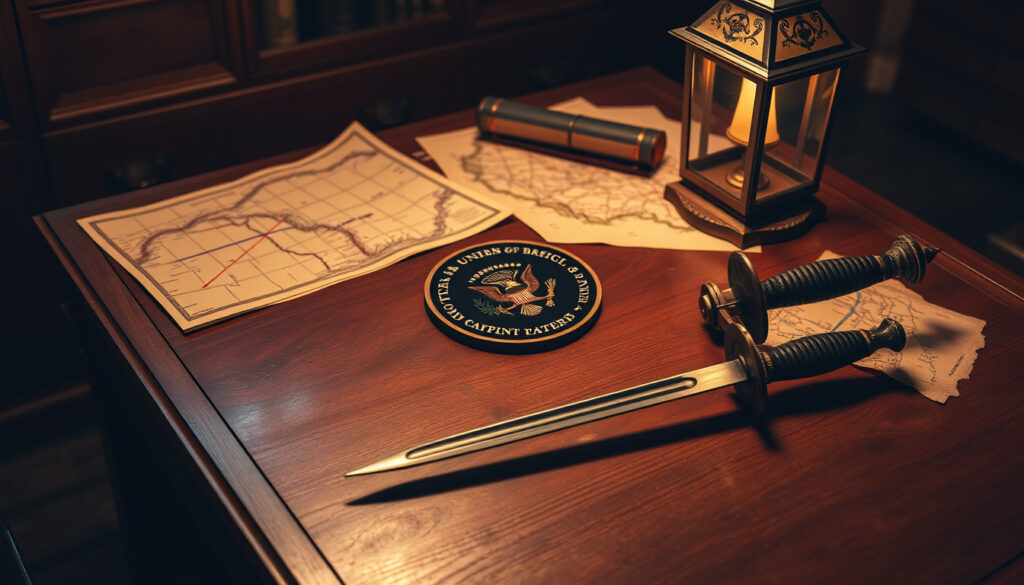
Ulysses S. Grant – Civil War General and 18th President
Ulysses S. Grant, born Hiram Ulysses Grant on April 27, 1822, in Point Pleasant, Ohio, rose from humble beginnings to become one of the most consequential figures in American history. As a Union general during the Civil War, he led the North to victory over the Confederacy. Later, he served two terms as the 18th President of the United States from 1869 to 1877, guiding the nation through the turbulent Reconstruction era.
Grant’s life encompassed military triumph, political power, personal struggle, and literary achievement. Despite facing financial ruin in his final years, he completed his Personal Memoirs just days before his death in 1885. Those memoirs would go on to be celebrated as among the finest autobiographical works in American literature.
This biography explores Grant’s multifaceted legacy—from his early years in Ohio through his wartime exploits, presidential tenure, and enduring impact on American history.
What Did Ulysses S. Grant Do as President?
April 27, 1822, Point Pleasant, Ohio
Union General, 18th U.S. President (1869–1877)
July 23, 1885, throat cancer
Republican
Key Insights
- Grant accepted General Robert E. Lee’s surrender at Appomattox Court House on April 9, 1865, effectively ending the Civil War
- He enforced Reconstruction policies in the South, working to protect the civil rights of newly freed Black Americans
- Grant supported passage of the 15th Amendment, which granted Black men the right to vote
- He established the Department of Justice in 1870 to enforce federal laws uniformly
- Grant pursued a peace policy with Native American tribes, attempting to move them onto reservations
- His administration was marked by several major scandals, including Crédit Mobilier and the Whiskey Ring
- Despite personal financial ruin, Grant completed his acclaimed Personal Memoirs shortly before his death
Facts Snapshot
| Fact | Detail |
|---|---|
| Full Name | Hiram Ulysses Grant |
| Height | 5 feet 8 inches |
| Nickname | “Unconditional Surrender” Grant |
| Political Party | Republican |
| Vice Presidents | Schuyler Colfax (1869–1873), Henry Wilson (1873–1877) |
| Military Rank | Lieutenant General |
| Spouse | Julia Boggs Dent (m. 1848) |
| Children | Four (three sons, one daughter) |
While multiple scandals plagued Grant’s administration—including the Crédit Mobilier railroad subsidy scandal and the Whiskey Ring tax fraud—historians generally agree that Grant himself was not personally corrupt. His secretary and several cabinet members were directly implicated in these schemes.
What Was Ulysses S. Grant’s Full Name and Nickname?
Grant was born Hiram Ulysses Grant in Point Pleasant, Ohio. His appointment to the United States Military Academy at West Point in 1839 came through a clerical error that recorded him as “Ulysses S. Grant”—reversing his first and middle names and dropping “Hiram” entirely. This change also avoided the initials “H.U.G.,” which his father found amusing. Grant continued using this name for the rest of his life.
The general earned his most famous nickname, “Unconditional Surrender,” during the Civil War. When Confederate forces at Fort Donelson in Tennessee demanded terms of surrender on February 11, 1862, Grant reportedly replied that he intended to accept only an unconditional surrender. The phrase resonated with the public and his troops alike. Standing approximately 5 feet 8 inches tall, Grant possessed a modest physical stature that belied his reputation as one of the most determined military commanders in American history.
Family Connections
Grant married Julia Boggs Dent in 1848. He had met her through her brother Frederick Dent, his West Point roommate. The couple had four children together—three sons and one daughter. Grant’s family would continue to serve the nation in subsequent generations. His great-grandson, Ulysses S. Grant III (1881–1968), became a major general in the United States Army and worked as a city planner.
The “S.” in Ulysses S. Grant never officially stood for anything. His given names were Hiram and Ulysses. The letter was likely added due to the clerical error at West Point and became permanent.
What Caused Ulysses S. Grant’s Death?
Ulysses S. Grant died on July 23, 1885, at the age of 63 from throat cancer at his home in Mount McGregor, New York. The disease had developed sometime before his diagnosis, and he had undergone a painful operation to remove a malignant growth from his throat in late 1884.
Remarkably, Grant’s final weeks became a testament to his determination. Financially ruined by the collapse of his investment firm Grant & Ward in 1884—losing nearly everything he had accumulated—he undertook the writing of his Personal Memoirs as a way to provide for his family after his death. Working against time and through significant pain, Grant completed the two-volume work just days before he passed away.
Grant’s Personal Memoirs
Published posthumously in 1885, Grant’s Personal Memoirs of Ulysses S. Grant covered his military career during the Civil War. The work received immediate critical acclaim and has since been recognized as one of the greatest autobiographical works in American literature. Writers from Mark Twain to Gertrude Stein praised its clarity, honesty, and literary merit. The book’s success ultimately provided generously for Grant’s widow Julia and their children.
Grant’s memoirs have been consistently ranked among the finest works of American literature. Some critics place them alongside The Autobiography of Benjamin Franklin as the two greatest American autobiographies.
Who Was Young Ulysses S. Grant?
Hiram Ulysses Grant was the first of six children born to Jesse Root Grant and Hannah Simpson Grant. His father worked as a tanner and held strong abolitionist convictions. The family moved from Point Pleasant to Georgetown, Ohio, in 1823, where young Ulysses grew up working on their farm.
As a boy, Grant displayed exceptional skills in horsemanship and became known for his ability to manage horses and wagons. He showed little interest, however, in working in his father’s tannery business. He attended various schools including subscription schools, the Maysville Seminary, and John Rankin’s academy, receiving an education typical of frontier children of the era.
West Point and Early Career
At his father’s urging, Grant received an appointment to West Point in 1839. He graduated 21st in a class of 39 in 1843, excelling particularly in mathematics and horsemanship—skills that would serve him well during his military career. Following graduation, he served with distinction in the Mexican-American War from 1846 to 1848.
After the war, Grant struggled professionally. Posted to the Pacific coast from 1852 to 1854, he faced isolation and failed business ventures. Rumors circulated about heavy drinking during this period. He resigned his army commission on April 11, 1854, and returned to civilian life.
Back in Missouri with his growing family, Grant attempted farming and real estate but met with limited success. By 1860, he had relocated to Galena, Illinois, where he worked as a clerk in his father’s leather goods business. This humble position would prove short-lived, however, as the outbreak of the Civil War in 1861 would thrust him back into military service and historical prominence.
Grant’s pre-Civil War years were marked by financial difficulty and professional uncertainty. These experiences shaped his character and provided contrast to his later successes as a military commander and president.
Ulysses S. Grant: Timeline of Key Events
- 1822: Born Hiram Ulysses Grant on April 27 in Point Pleasant, Ohio
- 1839: Receives appointment to West Point, name changed to Ulysses S. Grant
- 1843: Graduates West Point, ranking 21st in his class
- 1848: Marries Julia Boggs Dent of Missouri
- 1854: Resigns from the U.S. Army after seven years of service
- 1861: Rejoins the Union Army following outbreak of Civil War
- 1862: Earns nickname “Unconditional Surrender” at Fort Donelson
- 1863: Captures Vicksburg, gaining control of the Mississippi River
- 1865: Accepts General Lee’s surrender at Appomattox Court House
- 1868: Elected 18th President of the United States
- 1877: Completes second term as President
- 1884: Financial firm Grant & Ward collapses, ruining him financially
- 1885: Completes Personal Memoirs; dies of throat cancer on July 23
What We Know for Certain About Grant
| Established Information | Uncertain or Debated Aspects |
|---|---|
| Born April 27, 1822, in Point Pleasant, Ohio | Severity and causes of reported drinking problems in 1850s |
| Served as Union general, achieving victory in Civil War | Whether Grant was fully aware of his associates’ corrupt schemes |
| Served two terms as 18th President (1869–1877) | Details of some Reconstruction-era policy deliberations |
| Died July 23, 1885, from throat cancer | Some personal relationships and private conversations |
| Wrote Personal Memoirs, considered American literature classics | Exact circumstances of financial dealings with Grant & Ward |
| Member of Republican Party | Extent of his personal spiritual beliefs throughout life |
Understanding Grant’s Historical Significance
Ulysses S. Grant occupies a unique position in American history. As a military commander, he demonstrated relentless determination and strategic vision that proved essential to preserving the Union. His willingness to accept high casualties in pursuit of victory has drawn criticism, but his ultimate success in defeating the Confederacy remains undisputed. While Grant’s military and presidential careers are well-documented, Ipswich Town vs Stoke City offers a deeper dive into his life.
As President, Grant faced enormous challenges during Reconstruction. He worked to protect the civil rights of Black Americans following emancipation and sought to build a more perfect union. Despite corruption scandals that plagued his administration, historians increasingly view his domestic policies in a more favorable light in recent reassessments.
Grant’s literary achievement with his Personal Memoirs represents a remarkable final chapter. Writing under extreme physical duress and financial pressure, he produced a work that continues to resonate with readers. His story—from frontier Ohio to the highest offices of government—embodies the promise and complexity of American history.
Sources and Expert Perspectives
“I have probably in a measure been a benefactor to my family, in enabling them to do things which without the proceeds of this book they could not have done.”
— Ulysses S. Grant, Personal Memoirs
This biography draws on multiple authoritative sources documenting Grant’s life and legacy. The White House Historical Association provides official perspectives on his presidency. The National Park Service maintains resources on his life and contributions. Britannica’s encyclopedic coverage offers scholarly analysis of his military and political career. The Additional information about Grant can be found through the Miller Center of Public Administration at the University of Virginia, which provides detailed biographical material on his pre-presidential years. The U.S. Grant Library houses primary source materials including letters, military records, and official documents.
Summary
Ulysses S. Grant’s life spanned the most transformative decades in American history. Born to a tanner’s family in Ohio, he rose to lead Union forces to victory in the Civil War, served two terms as the 18th President, and produced one of American literature’s most celebrated memoirs. Despite scandals that shadowed his administration and financial ruin that marked his final years, Grant’s legacy endures through his military victories, civil rights achievements, and literary contributions. His story reflects both the triumphs and challenges of the American experience during a critical period in the nation’s development.
For more historical content, explore our S&P Global – Company Profile History and Key Facts resource.
Frequently Asked Questions
What were Ulysses S. Grant’s major accomplishments as President?
Grant enforced Reconstruction policies, supported the 15th Amendment granting Black men the right to vote, established the Department of Justice, and pursued peace policies with Native American tribes.
What was Ulysses S. Grant’s full name?
Grant was born Hiram Ulysses Grant on April 27, 1822. He became known as Ulysses S. Grant due to a clerical error at West Point that reversed his first and middle names.
What books did Ulysses S. Grant write?
Grant wrote Personal Memoirs of Ulysses S. Grant, published posthumously in 1885. This two-volume work covering his Civil War career is considered one of the finest autobiographical works in American literature.
Who was Ulysses S. Grant III?
Ulysses S. Grant III (1881–1968) was the great-grandson of President Grant. He served as a major general in the U.S. Army and worked as a city planner.
What political party did Ulysses S. Grant belong to?
Grant was a Republican. He was elected president in 1868 and re-elected in 1872, serving two terms from 1869 to 1877.
How did Ulysses S. Grant die?
Grant died from throat cancer on July 23, 1885, at his home in Mount McGregor, New York. He completed his Personal Memoirs just days before his death.
What was Ulysses S. Grant’s nickname?
Grant earned the nickname “Unconditional Surrender” Grant after demanding unconditional surrender from Confederate forces at Fort Donelson in 1862.
How tall was Ulysses S. Grant?
Grant stood approximately 5 feet 8 inches tall, a relatively modest stature for a military commander of his era.
More related posts
 Arielle Kebbel Movies and TV Shows: Complete Filmography
 Fetal Alcohol Syndrome Face: Signs, Symptoms, and Diagnosis
 10 Things I Hate About You: Poem, Cast & Friendship
 Phentermine Side Effects in Females: Risks and Dangers
 Where Can I Watch Big Brother Online – 2024 Streaming Guide
 Both Sides Now Lyrics – Meaning, History & Covers
 Is Cucumber a Fruit? Botanical vs Culinary Classification
 How to Download Facebook Video : 4 Verified Method (2025 Guide)