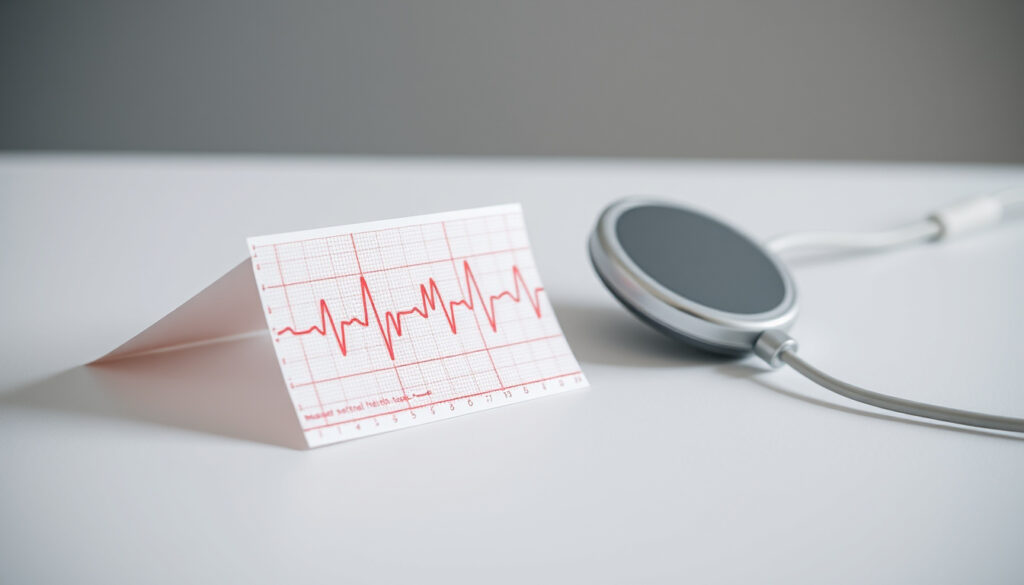
What Is an EKG? Understanding This Common Heart Test
Your doctor says you need an EKG, and suddenly a dozen questions pop up: Will it hurt? How long does it take? What will it actually show? An electrocardiogram — often called an EKG or ECG — is one of the most common heart tests in medicine, but it’s also one of the least understood, and this guide walks you through what the test measures, how to prepare, what the results can and can’t tell you, and exactly what happens during those few minutes on the table.
Test duration: 3–10 minutes ·
Electrodes placed: 10 electrodes (12 leads) ·
Pain level: None (noninvasive) ·
Results availability: Immediately after test ·
Radiation exposure: None
Quick snapshot
- EKG is the gold standard for diagnosing arrhythmias (American College of Cardiology)
- A normal EKG cannot completely rule out heart disease (Mayo Clinic)
- The test is safe for all ages, including pregnancy (MedlinePlus)
- How often an EKG should be repeated in asymptomatic individuals remains debated (American Heart Association)
- Out-of-pocket cost varies widely by provider and insurance (UC Davis Health)
- The prognostic value of a normal EKG in asymptomatic individuals is uncertain (NHLBI)
- Recording takes 3 minutes; total appointment is 10–15 minutes (NHS)
- Results are reviewed by a cardiologist within hours (Cleveland Clinic)
- If EKG is abnormal, follow-up tests may include stress test, Holter monitor, or echocardiogram (NCBI Bookshelf)
- If normal but symptoms persist, further monitoring is recommended (American College of Cardiology)
Six facts, one pattern: the EKG is a remarkably straightforward test that packs a lot of diagnostic punch — but it has limits that patients need to understand.
| Fact | Value |
|---|---|
| Full name | Electrocardiogram (ECG or EKG) |
| What it measures | Electrical signals of the heart |
| Commonly used for | Detecting arrhythmias, heart attacks, and heart strain |
| Pain level | None |
| Radiation | None |
| Typical duration | 3–10 minutes for recording |
What is an EKG and what does it detect?
How an EKG works
- An electrocardiogram records the heart’s electrical activity through electrodes placed on the chest, arms, and legs (MedlinePlus, a service of the National Library of Medicine).
- Each heartbeat generates an electrical signal that travels through the heart and triggers the chambers to contract in the proper rhythm (MedlinePlus).
- Wires connect the electrode patches to a computer that prints or displays the results (Mayo Clinic, a top-ranked U.S. hospital).
What the electrical tracing shows
- EKG can help show how fast the heart is beating and whether the heartbeat is steady or irregular (MedlinePlus).
- It assesses the strength and timing of electrical signals passing through different parts of the heart (MedlinePlus).
- Sometimes it can help measure the size and position of the heart’s chambers (MedlinePlus).
Common conditions detected
- Arrhythmias (irregular heartbeats) (Mayo Clinic).
- Heart attacks — both past and current, shown by ST-segment elevation or Q waves (Mayo Clinic).
- Heart failure, heart damage, and electrolyte imbalances (Cleveland Clinic, a leading academic medical center).
- How well a pacemaker is working (Cleveland Clinic).
The EKG is incredibly good at catching electrical chaos — but it can miss problems that come and go, like intermittent palpitations. That’s why a normal tracing doesn’t mean the heart is perfect.
What this means: The EKG is powerful but not perfect, and patients should not assume a normal result means no heart problem.
What does an EKG tell you?
Heart rate and rhythm
- The EKG reveals whether your heartbeat is too fast (tachycardia), too slow (bradycardia), or irregular (arrhythmia) (MedlinePlus).
- It measures the interval between beats with millisecond precision (NHLBI, part of the National Institutes of Health).
Signs of inadequate blood flow
- ST-segment elevation or depression can indicate that part of the heart muscle isn’t getting enough oxygen (American Heart Association).
- Q waves can mark a heart attack that may have occurred weeks or months earlier (Mayo Clinic).
Structural abnormalities
- Enlargement of the heart chambers can sometimes be detected from the electrical patterns (MedlinePlus).
- Conduction blocks — delays in the electrical pathway — show up as widened or prolonged waves (NCBI Bookshelf, a medical reference database).
An abnormal EKG is a strong signal to investigate further, but a perfectly normal EKG doesn’t guarantee a healthy heart. If your doctor still suspects a problem, they’ll likely order a stress test or Holter monitor — the EKG is a starting point, not the final word.
The implication: A normal EKG does not clear the heart of all issues; further testing is often warranted if symptoms persist.
What are three reasons a person would get an EKG?
Chest pain or pressure
- Chest discomfort is the most common reason to rule out a heart attack (Mayo Clinic).
- An EKG is often the first test ordered when a person has signs of a heart condition (MedlinePlus).
Palpitations or dizziness
- Unexplained palpitations, lightheadedness, or fainting warrant an EKG to check for arrhythmias (Cleveland Clinic).
- A 30-second snapshot of electrical activity can pick up telltale patterns that explain why you feel your heart racing (HSE Ireland, a national health service).
Pre‑surgical evaluation
- Before major surgeries, an EKG establishes a baseline heart function and identifies hidden risks (American College of Cardiology).
- It’s also used to screen people with a family history of heart disease who haven’t had symptoms (NHLBI).
The pattern: EKGs are used both for acute symptoms and as a preventive screen in higher-risk individuals.
What should you not do before an EKG?
Avoid caffeine and nicotine
- Caffeine and nicotine can artificially speed up the heart rate and alter results (Mayo Clinic).
- Most providers recommend avoiding coffee, tea, soda, and smoking for at least two hours before the test (Cleveland Clinic).
Skip heavy exercise
- Strenuous exercise before the test may mask or create abnormal readings (NHS).
- Light activity like walking is fine, but avoid a workout right before your appointment (UC Davis Health).
Keep skin clean and dry
- Do not apply lotions, oils, or powders to your chest — they interfere with electrode adhesion (Mayo Clinic).
- Wear a two-piece outfit so you can easily expose your chest and lower legs (NHS).
A single cup of coffee or a morning jog can change your EKG tracing enough to cause a false alarm. For a clean, accurate reading, treat the two hours before your test as a calm, caffeine‑free zone.
The catch: Even minor lifestyle factors can distort the tracing, making preparation critical for accurate results.
What is an EKG and how long does it take?
Step‑by‑step of the test
- You lie on an exam table, shirtless, with small adhesive patches (electrodes) placed on your chest, arms, and legs (Mayo Clinic).
- Ten electrodes create 12 different views of your heart’s electrical activity (the “12‑lead EKG”) (American Heart Association).
- You lie still and breathe normally while the machine records for about 3 minutes (NHS).
Duration and aftercare
- The actual recording lasts about 3 minutes; total appointment time is 10–15 minutes (NHS).
- No needles, no radiation, no pain — you can resume normal activities immediately (Cleveland Clinic).
- The electrodes are peeled off; any remaining adhesive can be wiped away with water.
When to expect results
- Results are available immediately and are reviewed by a cardiologist or primary care doctor (Mayo Clinic).
- Your doctor will discuss the findings — if abnormal, further testing is often scheduled (MedlinePlus).
What this means: With immediate availability of results, you often get preliminary information before leaving the appointment, though a full cardiologist review may take longer.
Confirmed facts vs. remaining uncertainties
Confirmed facts
- EKG is the gold standard for diagnosing arrhythmias (American College of Cardiology).
- A normal EKG cannot completely rule out heart disease (Mayo Clinic).
- The test is safe for all ages, including pregnancy (MedlinePlus).
What’s unclear
- How often an EKG should be repeated in asymptomatic individuals (American Heart Association).
- The precise out‑of‑pocket cost varies widely by provider and insurance (UC Davis Health).
- The prognostic value of a normal EKG in asymptomatic individuals is uncertain (NHLBI).
The implication: Understanding both what an EKG can and cannot do helps set realistic expectations for patients and clinicians alike.
“An electrocardiogram (ECG or EKG) is a quick test to check the heartbeat. It records the electrical signals in the heart.”
“An electrocardiogram (EKG or ECG) is a quick, noninvasive test that records your heart’s electrical activity.”
“An abnormal EKG can be a sign of a heart problem.”
The EKG is a powerful, low‑cost tool — but its greatest value lies in being part of a larger diagnostic picture. For anyone experiencing chest pain or palpitations, the decision is clear: an EKG is a fast, safe first step. If symptoms persist or the EKG raises questions, follow‑up testing is not optional. For patients, knowing both the strengths and blind spots of this common test can make all the difference.
cvrti.utah.edu, hvcmd.com, dulyhealthandcare.com, sunnyvalecardiology.net
If you are looking for a rundown of the terminology, you can also read about the similar ECG test on a different site.
Frequently asked questions
Can I eat or drink before an EKG?
Yes, you can eat normally. Avoid caffeine (coffee, tea, energy drinks) for at least two hours before the test, as it can speed up your heart rate and affect results (Mayo Clinic).
Does an EKG hurt?
No — it is completely painless. The electrodes are adhesive pads that stick to your skin. You may feel a slight tug when they are removed, but nothing more (Cleveland Clinic).
Can an EKG detect a heart attack that happened weeks ago?
Yes — a past heart attack can leave permanent changes in the heart’s electrical pattern, such as Q waves, that are visible on an EKG (Mayo Clinic).
Do I need to shave my chest for an EKG?
Not necessarily. If you have a very hairy chest, the technician may need to shave small patches where the electrodes are placed. It’s best not to shave yourself beforehand (NHS).
Will I need to undress completely for the test?
No. You will be asked to remove your shirt and any jewelry or accessories around your neck and chest. Women usually keep their bra on, though the technician may need access to the lower ribs (Cleveland Clinic).
What does an abnormal EKG mean?
It can mean many things — from a harmless extra beat to a serious arrhythmia, a past heart attack, or signs of a current heart problem. Your doctor will interpret the pattern in the context of your symptoms and other tests (MedlinePlus).
Can anxiety affect EKG results?
Yes. Stress and anxiety can increase your heart rate and cause minor changes in the tracing. That’s why it’s important to relax during the test and avoid caffeine beforehand (American Heart Association).
Are EKG and ECG the same thing?
Yes — they are exact synonyms. EKG uses the German spelling (Elektrokardiogramm) to avoid confusion with EEG (brain wave test). Both refer to the same procedure (Cleveland Clinic).
More related posts
 Free Monopoly GO Dice Links: How to Get Free Rolls Daily
 Landman Season 2 Release Date: Schedule & How to Watch
 How to Lower LDL Naturally: Quick Diet & Lifestyle Changes
 When Was the Vietnam War? Dates, Timeline & U.S. Role
 Galaxy M02 : Price, Spec , and Buying Guide (2026)
 2024 Ford Mustang GT: Pricing, Specs, Common Problems
 Labubu Where to Buy in Ireland: Official Retailers & Authenticity
 How to Download Facebook Video : 4 Verified Method (2025 Guide)