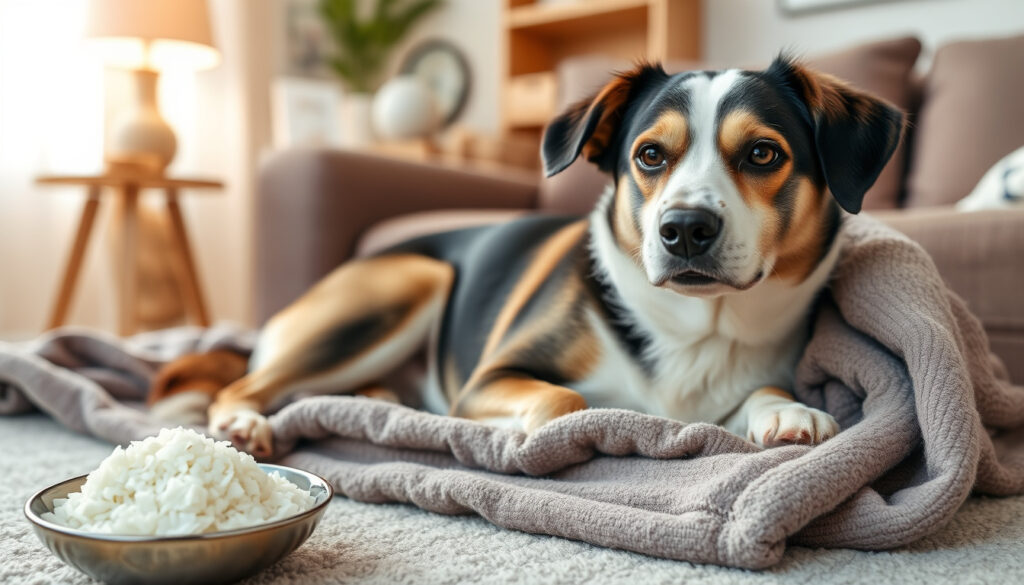
Dog Has Diarrhea But Acting Fine? Causes & Home Care
You notice your dog’s stool is soft or watery, but he’s wagging his tail and begging for a treat like nothing’s wrong — a confusing moment that’s surprisingly common. Over 20% of dogs experience diarrhea at least once, and most cases resolve without a vet visit, but this guide walks you through when to manage at home and when to call the vet.
Duration of typical acute diarrhea: 24–48 hours · Dogs that experience diarrhea at least once: Over 20% · Timeframe recommended before vet visit: 48 hours if dog is acting normal · Dehydration risk after 2–3 days: Significant
Quick snapshot
- Dog is eating, drinking, and playing normally (PetMD veterinary team)
- Diarrhea is soft but not watery or bloody (PetMD veterinary team)
- Duration less than 48 hours (PetMD veterinary team)
- Diarrhea persists beyond 48 hours (Cornell Riney Canine Health Center)
- Blood or mucus in stool (Chewy veterinary team)
- Vomiting or loss of appetite (GoodRx)
- Withhold food for 12–24 hours (Cornell Riney Canine Health Center)
- Provide plenty of fresh water
- Introduce bland diet gradually (PetMD veterinary team)
- Plain pumpkin puree (1–2 tbsp) (Rover pet care team)
- Boiled white rice and skinless chicken (Rover pet care team)
- Probiotic supplements for dogs (Rover pet care team)
Five key facts help you decide whether to wait or call the vet — a quick reference from the sources most trusted by pet owners.
| Indicator | What to Do |
|---|---|
| Duration before concern | 48 hours |
| Hydration check | Skin tent test; offer water |
| Blood in stool | Contact vet immediately (Chewy veterinary team) |
| Mucus in stool | Usually not urgent if dog is normal (GoodRx) |
| Vomiting + diarrhea | Vet visit recommended (PetMD veterinary team) |
Waiting 48 hours at home is safe for most dogs, but the window shrinks fast for puppies and seniors. The Cornell Riney Canine Health Center stresses that if a bland diet doesn’t work after 2–3 days, a vet visit becomes necessary.
Why Has My Dog Had Diarrhea for 3 Days But Acts Fine?
Common causes of diarrhea in otherwise normal dogs
- Dietary indiscretion – eating something they shouldn’t (PetMD veterinary team)
- Stress or anxiety (Rover pet care team)
- Sudden food changes
Dietary indiscretion and stress-induced diarrhea
When a dog eats something off the ground or switches food abruptly, the gut can react with loose stool while the rest of the body stays fine. The American Veterinary Medical Association notes that stress from boarding, travel, or changes in routine can also trigger a transient bout.
When 3 days of diarrhea becomes a concern
If your dog is acting normal but diarrhea has lasted three days, the timeline for veterinary intervention has passed. The Heart + Paw veterinary team advises that diarrhea lasting longer than two days should be checked, even if the dog seems fine. At this point, dehydration and electrolyte imbalance become real risks (Chewy veterinary team).
The dog’s normal behavior can be misleading. By day three, the gut lining may be damaged even if the dog is still playful. A vet can run a fecal test to rule out giardia, coccidia, or bacterial overgrowth — all of which can cause prolonged diarrhea without systemic illness.
The implication: Normal behavior does not rule out gut damage after three days.
How Long Is Too Long for a Dog to Have Diarrhea?
General timeline: 24–48 hours for acute diarrhea
For an otherwise healthy adult dog, acute diarrhea that resolves within 24 to 48 hours is considered self-limiting. The Cornell Riney Canine Health Center advises that if diarrhea does not resolve in 48–72 hours, veterinary care is needed.
Chronic diarrhea: longer than 3–4 weeks
Diarrhea that persists for weeks is classified as chronic and requires a full diagnostic workup. Causes range from inflammatory bowel disease to food allergies (GoodRx).
Red flags that shorten the timeline
- Blood in stool (bright red or black/tarry) – immediate vet (Chewy veterinary team)
- Vomiting alongside diarrhea (PetMD veterinary team)
- Lethargy or loss of appetite (GoodRx)
- Puppy or senior dog (Chewy veterinary team)
The pattern: if any of these red flags appear, the 48-hour clock resets to zero — call a vet immediately.
What Clears Up Dog Diarrhea?
Withholding food for 12–24 hours
Fasting gives the gastrointestinal tract a rest. The Cornell Riney Canine Health Center recommends withholding food for 12–24 hours while ensuring access to fresh water. This is often the first and most effective step.
Bland diet: boiled chicken and rice
After the fast, introduce a bland diet of boiled white rice and skinless chicken. The Rover pet care team notes that this combination is easy to digest and helps firm up stool. Avoid dairy, fatty foods, and seasonings.
Probiotics and fiber supplements
Probiotics designed for dogs can help restore gut flora, though the exact benefit for acute diarrhea is still debated. Plain pumpkin puree (1–2 tablespoons per meal) adds soluble fiber, which can help absorb excess water in the stool.
Home remedies work well for simple cases, but they can delay treatment for serious conditions like pancreatitis or parvovirus. If the dog’s behavior changes even slightly, stop home care and see a vet.
The key takeaway: Home care works for simple cases, but any change in behavior should prompt a vet visit.
What Human Medicine Can I Give My Dog to Stop Diarrhea?
Imodium (loperamide) – when safe and when dangerous
Loperamide can be used in healthy dogs, but it is contraindicated in herding breeds (Collies, Shetland Sheepdogs, Australian Shepherds) because they carry a genetic mutation that prevents proper drug metabolism (GoodRx). Never give any human medication without veterinary approval.
Pepto-Bismol – risks of salicylate toxicity
Pepto-Bismol contains bismuth subsalicylate, which can cause salicylate toxicity in dogs, leading to vomiting, ulcers, and kidney damage. The PetMD veterinary team advises against using it without explicit vet guidance.
Probiotics vs. anti-diarrheals
Probiotics are generally safer than human anti-diarrheals because they work with the gut rather than suppressing symptoms. However, they are not a quick fix. Anti-diarrheal medications can mask underlying illness, so treating the cause rather than the symptom is always preferable.
The critical point: Never use human medications without veterinary guidance to avoid serious risks.
What Are the First Signs of Parvo and When to Worry?
Parvo diarrhea: appearance and odor
Parvovirus causes a distinctive foul-smelling, often bloody diarrhea that may contain mucus. The stool is typically liquid and can be dark red or brown. The Heart + Paw veterinary team emphasizes that this is a medical emergency.
Other early symptoms – lethargy, vomiting, fever
Before the diarrhea becomes severe, dogs with parvo usually become lethargic and lose their appetite. Vomiting often follows, and the dog may run a fever. The GoodRx team notes that these signs prompt immediate veterinary attention, even if the dog still seems active.
High-risk puppies and vaccination status
Unvaccinated puppies, especially those under 6 months, are at highest risk. A puppy with diarrhea and a normal appetite could still be in the early stages of parvo. The Chewy veterinary team advises that any puppy with diarrhea should be seen by a vet, regardless of behavior.
A dog can have parvo and still seem fairly normal in the first 12 hours. By the time severe lethargy or bloody diarrhea appears, the virus has already caused significant damage. Early testing saves lives.
The reality: Early parvo can be deceptive; testing is the only way to be sure.
Pros and Cons of Home Care for Dog Diarrhea
Upsides
- Cost-effective for mild cases
- Reduces stress on the dog (no vet visit)
- Fasting and bland diet are low-risk interventions
- Allows monitoring by the owner
Downsides
- Risk of missing serious conditions (parvo, pancreatitis)
- Dehydration can develop unnoticed
- May delay effective treatment
- Incorrect use of human medications can be dangerous
The verdict: Home care is safe for mild cases, but the risk of missing serious illness makes vet consultation wise.
Step-by-Step Home Care Plan
- Stop feeding for 12–24 hours – but keep fresh water available. The Cornell Riney Canine Health Center recommends this as the first step.
- Check hydration – perform the skin tent test: gently lift the skin between the shoulder blades; if it doesn’t snap back quickly, the dog may be dehydrated (Chewy veterinary team).
- Introduce a bland diet – after the fast, offer small meals of boiled white rice and skinless chicken. The PetMD veterinary team suggests feeding 3–4 small meals per day.
- Add fiber – mix in 1–2 tablespoons of plain pumpkin puree per meal to help firm stool.
- Monitor stool and behavior – if diarrhea continues beyond 48 hours, or if vomiting, blood, or lethargy appear, contact a veterinarian.
Following these steps carefully can resolve most mild diarrhea cases.
Expert Perspectives
If your dog has diarrhea but otherwise acts healthy and happy, you shouldn’t worry.
— PetMD veterinary team (PetMD)
Prolonged diarrhea can lead to dehydration and electrolyte imbalances.
— American Veterinary Medical Association (AVMA)
These expert opinions reinforce the balance between watchful waiting and seeking help.
Summary
When a dog has diarrhea but acts fine, the owner’s instinct to wait and watch is often correct — but only for the first 48 hours. After that, the risk of dehydration and hidden disease climbs. For the average pet owner in Ireland, the choice is clear: follow the home care steps above, but set a 48-hour boundary. If the stool hasn’t firmed up by then, a vet visit is the only responsible move.
moonlightpetstore.com, heartandpaw.com, petscare.com, petassure.com, azvet.com, moonlightpetstore.com, vetster.com
Frequently asked questions
Can I give my dog rice water for diarrhea?
Yes, rice water (the leftover water from boiling rice) can be offered in small amounts. It provides electrolytes and may help soothe the digestive tract. The Rover pet care team notes it as a safe home remedy for mild cases.
Is it safe to withhold water when my dog has diarrhea?
No, never withhold water. Diarrhea causes fluid loss, and dehydration can develop quickly. The Chewy veterinary team emphasizes that fresh water must always be available.
What does yellow diarrhea mean in dogs?
Yellow diarrhea often indicates that food is moving through the intestines too quickly (bile doesn’t have time to break down). It’s common in mild cases but can also signal liver or gallbladder issues if persistent (GoodRx).
Can stress cause diarrhea in dogs?
Yes, stress from boarding, travel, changes in routine, or loud noises can trigger diarrhea. The PetMD veterinary team confirms that stress-induced diarrhea is usually self-limiting.
Should I give my dog probiotics during diarrhea?
Probiotics can help restore gut flora, though the evidence for acute diarrhea is mixed. The Heart + Paw veterinary team recommends dog-specific probiotic products over human ones.
How can I tell if my dog is dehydrated from diarrhea?
Check for signs: dry gums, sunken eyes, lethargy, and skin that doesn’t snap back when gently pinched. The Chewy veterinary team lists these as red flags that warrant a vet call.
Is it common for puppies to have diarrhea after vaccination?
Mild diarrhea can occur after vaccination due to a temporary immune response. The GoodRx team advises monitoring for 24 hours; if it persists or the puppy seems unwell, contact a vet.
The answers above address the most common concerns about managing dog diarrhea at home.
Related reading
- Pet Insurance Guide – Understand how pet insurance can cover vet visits for issues like diarrhea.
- Kittens for Sale Near Me – Broader pet care resources for Irish pet owners.
More related posts
 Samford vs Texas A&M: 48-0 Recap, Highlights and Key Takeaways
 Find the Best Empanada de Carne Cortada a Cuchillo Near Me
 UC Berkeley Acceptance Rate 2025: 11.4% Stats & Tips
 Watch Trouble with the Curve: Plex, Prime & More
 K-12 Education News Today: AI Policies, Issues & Rankings
 Where Can I Watch Big Brother Online – 2024 Streaming Guide
 Marc Jacobs Snapshot Bag: 2024 Guide, Pricing & Styling
 Charlie Sheen Movies and TV Shows – Complete Filmography and Career Guide