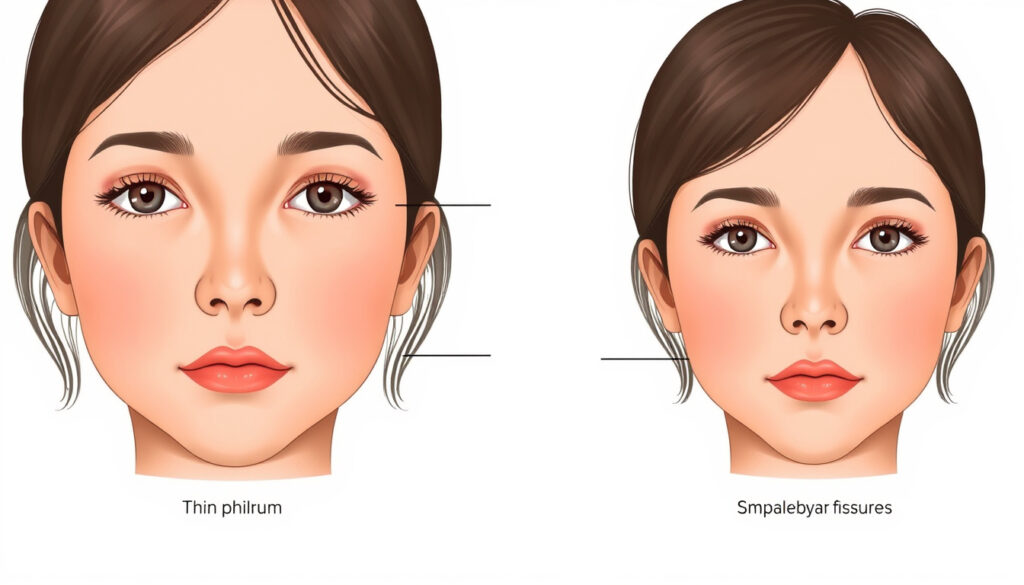
Fetal Alcohol Syndrome Face: Signs, Symptoms, and Diagnosis
If you’ve ever seen a photo of a child with fetal alcohol syndrome (FAS), the face is hard to forget—small eyes, a thin upper lip, and a smooth, featureless ridge between the nose and mouth. But those visible features are only the surface of a condition that reshapes a person’s brain, behavior, and lifespan, leading to lifelong challenges from a preventable cause.
Prevalence of FAS in the United States: 0.2–1.5 per 1,000 live births · Diagnostic facial features required: 3 · Life expectancy reduction: 30–40 years · Alcohol consumption during pregnancy: known safe amount: None
Quick snapshot
- Three facial features are diagnostic for FAS: short palpebral fissures, smooth philtrum, thin upper lip (CDC).
- No amount of alcohol during pregnancy is considered safe (Government of Canada).
- FAS causes lifelong cognitive and behavioral impairments (MedlinePlus).
- Whether very low-level alcohol exposure (e.g., one glass) can cause FAS in all cases (PubMed).
- Whether FAS facial features worsen with age (they may become less pronounced, but underlying deficits persist) (PubMed).
- The exact mechanisms by which alcohol causes the specific facial features (PMC/NIH).
- Facial features are most distinctive in children and may become less pronounced with age (PubMed).
- Diagnosis often occurs at birth or in early childhood when low birth weight and facial features are observed (Cleveland Clinic).
- Early intervention and supportive care can improve outcomes for individuals with FAS (CDC).
- Research continues on the mechanisms of alcohol teratogenicity and potential therapies (PubMed).
Five key facts, one pattern: the most severe form of fetal alcohol spectrum disorders (FASD) has a distinct facial phenotype that, combined with growth and brain damage, confirms the diagnosis.
| Fact | Value |
|---|---|
| Prevalence of FAS | 0.2–1.5 per 1,000 live births |
| Diagnostic facial features | 3 (short palpebral fissures, smooth philtrum, thin upper lip) |
| Life expectancy decrease | 30–40 years |
| Safe alcohol level during pregnancy | None |
| Most severe form of FASD | Fetal alcohol syndrome (FAS) |
What are the facial signs of fetal alcohol syndrome?
Three facial features form the cornerstone of the physical diagnosis. The CDC (U.S. public health authority) lists a smooth ridge between the nose and upper lip (smooth philtrum), small eye openings (short palpebral fissures), and a thin upper lip. The Cleveland Clinic (major academic medical center) states that a diagnosis of FAS requires at least two of these facial features.
The three characteristic facial features of FAS
- Short palpebral fissures – small horizontal width of the eye opening. PubMed research confirms this is one of the most consistent findings.
- Smooth philtrum – the groove between the nose and upper lip is flat or absent. Government of Canada notes this as a hallmark feature.
- Thin upper lip – the vermilion border is notably narrow. Government of Canada describes this as a defining trait.
These three features are not just cosmetic—they are reliable markers that, when present with growth deficiency and central nervous system damage, confirm the diagnosis even without a documented history of alcohol exposure during pregnancy. CDC states that confirmation of prenatal alcohol exposure is not required for diagnosis of FASDs.
How facial features change with age
Facial features are most distinctive in children. As a person ages, the features may soften, making diagnosis harder in adolescents and adults. PubMed research indicates that the facial phenotype becomes less pronounced over time, but the underlying cognitive and behavioral deficits persist.
Facial features vs. normal development
What distinguishes FAS facial features from normal variation is the combination of all three signs. MSD Manual (clinical reference for healthcare professionals) notes that microcephaly (small head size) and short stature often accompany the facial signs. The pattern is specific enough that an experienced clinician can often identify FAS at birth.
What are 5 signs and symptoms of FASDs?
FASDs cover a range of effects from mild to severe. The CDC (U.S. public health authority) groups them into physical, cognitive, and behavioral categories.
Physical signs of FASDs
- Low body weight and shorter-than-average height (MedlinePlus)
- Small head size (microcephaly) (CDC)
- Poor coordination and vision or hearing problems (MSD Manual)
- Abnormal palmar creases and cardiac defects (MSD Manual)
Cognitive and behavioral symptoms
- Intellectual disability or low IQ (CDC)
- Learning disabilities, poor memory, speech and language delays (Government of Canada)
- Hyperactivity, difficulty with attention, poor reasoning and judgment (Government of Canada)
Growth deficiency
Poor growth before and after birth is a hallmark. MedlinePlus (U.S. National Library of Medicine) states that FAS can cause poor growth, decreased muscle tone, and poor coordination.
Physical signs like facial features are often the first thing parents and doctors notice, but the cognitive and behavioral deficits are what truly shape a person’s life trajectory. As MedlinePlus puts it, almost none of these children have normal brain development.
The pattern: while the face is a diagnostic shortcut, the real burden of FAS lies in the brain—attention deficits, memory problems, and social difficulties that persist into adulthood.
What is the life expectancy with FAS?
Life expectancy is dramatically reduced. The CDC (U.S. public health authority) reports that individuals with FAS have a life expectancy 30–40 years shorter than the general population.
Factors affecting life expectancy in FAS
- Common causes of early death include accidents, heart defects, and complications from mental health issues (CDC).
- Early intervention and supportive care can improve outcomes (CDC).
Causes of early death in individuals with FAS
According to CDC, the leading causes are external (accidents, suicide) and internal (congenital heart defects, seizures). The Government of Canada notes that impulsivity and poor judgment contribute to risky behaviors that shorten life.
The implication: FAS is not just a childhood condition—it is a lifelong disability that, without adequate support, can lead to early death. The 30–40 year gap is a stark reminder of the consequences of prenatal alcohol exposure.
What are the behaviors of fetal alcohol syndrome in adults?
Adults with FAS face a distinctive set of challenges that often go unrecognized. The Government of Canada (public health agency) describes impulsivity, unfocused behavior, and difficulty handling money and telling time.
Common behavioral challenges in adults with FAS
- Impulsivity and poor judgment (CDC)
- Difficulty with social relationships and employment (CDC)
- Co-occurring mental health conditions like depression or anxiety (Government of Canada)
Support and interventions for adults
Structured support, vocational training, and counseling can improve quality of life. CDC emphasizes that adults with FAS benefit from consistent routines, clear expectations, and social skills training.
The trade-off: the facial features may fade, but the behavioral challenges do not. Adults with FAS often appear “normal” but struggle with the invisible cognitive deficits that make independent living difficult.
Can a glass of wine cause fetal alcohol syndrome?
This is one of the most common questions expectant mothers ask. The answer is unequivocal: no amount of alcohol during pregnancy is considered safe. The CDC (U.S. public health authority) states that there is no known safe amount, safe time, or safe type of alcohol during pregnancy.
Research on low-level alcohol exposure during pregnancy
While the risk of FAS increases with heavy drinking, even a single glass of wine can increase the risk of alcohol-related birth defects. PubMed research notes that the timing of exposure, genetics, and maternal health all influence the outcome. The precise threshold for harm is not known, which is why complete abstinence is recommended.
No known safe amount of alcohol during pregnancy
Major health organizations, including the CDC, the Government of Canada, and the CDC, all agree: the safest choice is to abstain from alcohol throughout pregnancy.
The pattern: the question “can one glass cause FAS?” misses the point. The risk is cumulative and individual. For some, one glass may cause harm; for others, it may not. The only guarantee is avoidance.
Clarity: What We Know and What We Don’t
Confirmed facts
- Three facial features are diagnostic for FAS (CDC).
- FAS causes lifelong cognitive and behavioral impairments (MedlinePlus).
- No amount of alcohol during pregnancy is safe (Government of Canada).
- FAS prevalence is 0.2–1.5 per 1,000 live births (CDC).
What’s unclear
- Whether very low-level alcohol exposure (e.g., one glass) can cause FAS in all cases.
- Whether FAS facial features worsen with age (they may become less pronounced, but underlying deficits persist).
- The exact mechanisms by which alcohol causes the specific facial features.
What this means: The combination of confirmed facts and acknowledged uncertainties provides a balanced understanding of FAS.
Expert Perspectives
Facial features typical of fetal alcohol syndrome include small eyes, a very thin upper lip, a flat nose bridge, and a smooth philtrum.
Diagnosis of FAS requires at least two of the following facial features: small width of eye opening, smooth ridge between nose and upper lip, and a thin upper lip.
— Cleveland Clinic (academic medical center)
Symptoms of FAS include facial features such as a smooth ridge between the nose and upper lip, damage to brain and spinal cord, and growth problems.
— CDC (U.S. public health authority)
For parents and clinicians, the choice is clear: the only way to prevent FAS is to avoid alcohol entirely during pregnancy. The face of FAS is a visible warning, but the real damage is invisible—and lasting. Every child deserves a chance at normal brain development, and that starts with zero alcohol exposure.
Related reading: How Long Are You Contagious With the Flu? A Day-by-Day Timeline · Can I Take 600 mg Ibuprofen Every 4 Hours? Safety Guide
pubmed.ncbi.nlm.nih.gov, en.wikipedia.org, slideshare.net, aafp.org, thesupportivecare.com
Frequently asked questions
What can be mistaken for fetal alcohol syndrome?
Conditions such as Noonan syndrome, Williams syndrome, and other genetic disorders can share some facial features with FAS. A thorough evaluation by a specialist is needed to differentiate (PubMed).
Does FAS get worse with age?
The facial features may become less pronounced, but the cognitive and behavioral deficits persist and can even become more challenging as social demands increase (CDC).
How to tell if a person has fetal alcohol syndrome?
Diagnosis is made by a healthcare provider using criteria including facial features, growth problems, and central nervous system abnormalities. There is no blood test (Cleveland Clinic).
What is the difference between FAS and FASD?
FAS is the most severe form of fetal alcohol spectrum disorders (FASD). FASD is an umbrella term for all conditions caused by prenatal alcohol exposure (CDC).
Can fetal alcohol syndrome be cured?
There is no cure for FAS. Treatment focuses on symptom management, early intervention, and supportive care (MedlinePlus).
Is it safe to drink alcohol during pregnancy in the third trimester?
No. Alcohol can harm the fetus at any stage of pregnancy. There is no safe time (Government of Canada).
What are the long-term effects of fetal alcohol syndrome?
Long-term effects include intellectual disability, behavioral problems, mental health disorders, and reduced life expectancy (CDC).
More related posts
 Layers of the Atmosphere: Complete Guide with Altitudes & Facts
 It Ends With Us: Book, Movie, and Controversy Explained
 iPhone 16 Plus Colors: All 5 Finishes Reviewed
 What Is an EKG? Understanding This Common Heart Test
 Personal Loan Interest Rates – Current Averages and Best Rates
 Capital Gains Tax Calculator: How to Calculate CGT (Ireland & UK)
 Buy a Black Dress Online: Top Stores and Styling Tips
 When Is the First Day of Spring? 2026 Dates & Traditions