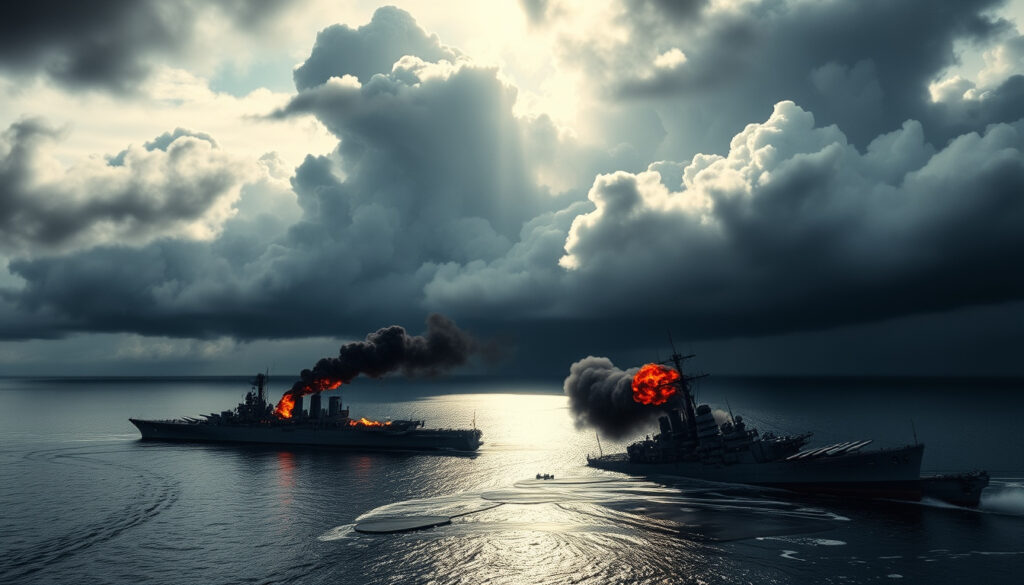
Attack on Pearl Harbor: Why Japan Attacked and What Happened
On a quiet Sunday morning, the skies above Hawaii turned into a battlefield. The attack on Pearl Harbor, launched by the Empire of Japan on December 7, 1941, remains one of the most pivotal moments in modern history—a surprise assault that plunged the United States into World War II.
Date of attack: December 7, 1941 ·
Japanese aircraft deployed: 353 ·
American casualties (killed/wounded): over 3,500 ·
U.S. battleships sunk or damaged: 8 ·
Duration of attack: 90 minutes
Quick snapshot
- Japan attacked Pearl Harbor on December 7, 1941 (U.S. Department of War)
- Over 2,400 Americans were killed (National Park Service)
- 8 battleships were sunk or damaged (The National WWII Museum)
- Whether Japan would have attacked without the U.S. oil embargo (historical debate) (National Security Agency)
- Whether early radar warnings could have prevented the attack (National Security Agency)
- Japanese fleet departed November 26, 1941 (The National WWII Museum)
- First wave struck at 7:48 AM on December 7 (The National WWII Museum)
- U.S. declared war on Japan on December 8, 1941 (U.S. Department of War)
- Germany declared war on the U.S. on December 11 (The National WWII Museum)
Eight key facts about the attack, drawn from official sources, highlight the scale and suddenness of the assault.
| Attribute | Detail |
|---|---|
| Date | December 7, 1941 (U.S. Department of War) |
| Location | Pearl Harbor, Oahu, Hawaii (National Park Service) |
| Attackers | Empire of Japan (The National WWII Museum) |
| Target | U.S. Pacific Fleet (U.S. Department of War) |
| Attack duration | Less than 90 minutes (The National WWII Museum) |
| American killed (military + civilian) | 2,403 (U.S. Department of War figure) (U.S. Department of War) |
| Americans wounded | 1,178 (U.S. Department of War) |
| Outcome | U.S. declares war on Japan; Germany declares war on U.S. (The National WWII Museum) |
Why did Japan actually attack Pearl Harbor?
American oil embargo and sanctions
By mid-1941, the United States had imposed a near-total embargo on oil and scrap metal exports to Japan, a direct response to Japan’s expansion into China and French Indochina. According to The National WWII Museum, Japan relied on the U.S. for more than 80% of its oil. The embargo threatened to cripple the Japanese war machine, leaving its leaders with what they saw as a stark choice: back down or seize alternative resources in Southeast Asia.
Japanese expansion in Asia
Japan’s imperial ambitions had already led to war with China in 1937. The National Park Service notes that Japanese planners viewed the resource-rich Dutch East Indies and British Malaya as essential—but attacking those targets risked provoking the U.S. Pacific Fleet based at Pearl Harbor. The solution, in Tokyo’s view, was a preemptive strike to neutralize that fleet.
Strategic goal to cripple the U.S. Pacific Fleet
Japanese Admiral Isoroku Yamamoto planned a knockout blow that would buy Japan six months of unimpeded expansion. The The National WWII Museum states that the attack force of 353 aircraft was designed to destroy the battleships and carriers at anchor. However, the U.S. carriers were at sea and survived, a fact that would prove decisive.
Japan attacked to secure oil, yet the attack itself guaranteed a long war with an industrial superpower whose oil supply it could not match.
The implication: Japan’s tactical gamble succeeded in the short term, but its strategic miscalculation—assuming America would accept a negotiated peace after a single blow—sealed its fate.
How long did the attack on Pearl Harbor last?
First wave (7:48 AM – 8:25 AM)
The first wave of 183 Japanese aircraft arrived over Pearl Harbor at 7:48 AM local time, according to The National WWII Museum. Torpedo planes struck Battleship Row while dive-bombers hammered airfields. Within minutes, the USS Arizona exploded, killing over 1,100 crew.
Second wave (8:40 AM – 9:45 AM)
Thirty minutes after the first wave cleared, a second wave of 170 aircraft arrived, focusing on the remaining ships and naval installations. The National Security Agency notes that Japanese air operations continued for a little over two hours, though the first wave did the greatest damage.
Total duration of the assault
While the official attack time from first bomb to last is often given as 90 minutes, the National Security Agency records continuous air operations lasting about two hours. Either way, the attack was compressed and ferocious: 19 U.S. ships and 300 aircraft were destroyed or damaged.
The trade-off: Japan’s rapid, two-wave strike maximized surprise but left critical targets—fuel depots and repair yards—untouched, a decision that would haunt their campaign.
What was Hitler’s reaction to Pearl Harbor?
Hitler’s declaration of war on the United States
On December 11, 1941, four days after Pearl Harbor, Adolf Hitler declared war on the United States. According to The National WWII Museum, the declaration came despite no explicit treaty obligation—the Tripartite Pact committed Germany to defend Japan if Japan were attacked, not the other way around.
Germany’s alliance obligations to Japan
Hitler’s decision was driven by his belief that war with the U.S. was inevitable and that Japan’s success would distract America from the European theater. The U.S. Department of War notes that this miscalculation gave President Roosevelt the unified public support needed to enter both the Pacific and Atlantic wars.
Strategic impact on World War II
Germany’s declaration of war extended the conflict into a truly global war. For the U.S., it ended any lingering isolationism and triggered a massive mobilization that would ultimately defeat both Axis powers.
Why this matters: Hitler’s move turned Pearl Harbor from a regional disaster into the moment the U.S. committed to defeating Germany first, a strategy that shaped the entire second half of the war.
Why are 900 men still trapped in the USS Arizona?
Wreckage designated a war grave
The USS Arizona sank in less than nine minutes after a bomb ignited its forward ammunition magazine. The National Park Service, which manages the site, explains that the ship was officially designated a war grave in 1950, and by law, human remains on military wrecks cannot be disturbed.
Structural instability prevents recovery
Decades of corrosion and structural collapse make any salvage operation dangerous. The National Park Service states that disturbing the wreck would risk further collapse and would disturb the remains of more than 900 crew members still entombed inside.
Memorial built above the hull
In 1962, the USS Arizona Memorial was constructed over—but not touching—the sunken hull. Visitors can see the oil droplets that still rise from the ship, sometimes called “black tears.” The National Park Service reports that the memorial draws more than 1.8 million visitors each year.
The catch: Preserving the wreck as a tomb means the men inside remain entombed—but it also ensures the site remains a tangible, solemn reminder of the attack.
What was the biggest mistake in Pearl Harbor?
Japanese failure to destroy repair facilities
Japanese commanders did not target the massive dry docks, fuel storage tanks, and repair shops at Pearl Harbor. According to The National WWII Museum, leaving these intact allowed the U.S. Navy to salvage many damaged battleships and return them to service within months—a critical error that shortened Japan’s window of advantage.
U.S. intelligence warnings ignored
Although U.S. intelligence had intercepted Japanese diplomatic traffic indicating an imminent attack, warnings were not effectively coordinated. The National Security Agency details how intercepts were delayed in transit and never reached the commanders in Hawaii in time.
Aircraft carriers not in port during the attack
The most consequential stroke of luck for the U.S. was that all three Pacific Fleet aircraft carriers—USS Enterprise, Lexington, and Saratoga—were at sea, delivering aircraft or under repair. The U.S. Coast Guard History notes that their survival preserved the U.S. Navy’s offensive striking power, which would prove decisive at the Battle of Midway six months later.
The pattern: Japan’s tactical focus on battleships and its failure to hit the carriers, fuel, and repair infrastructure turned a tactical victory into a strategic liability.
The decisions made in those 90 minutes—what Japan targeted and what it left untouched—continue to be studied by military strategists as a textbook case of tactical success masking strategic failure.
Timeline: The attack on Pearl Harbor
- 1940–1941 – U.S. imposes embargo on oil and scrap metal to Japan.
- November 26, 1941 – Japanese strike force departs from the Kuril Islands.
- December 7, 1941 (7:48 AM) – First wave of 183 Japanese aircraft begins the attack.
- December 7, 1941 (8:40 AM) – Second wave of 170 aircraft begins.
- December 7, 1941 (9:45 AM) – Last Japanese aircraft leave the area.
- December 8, 1941 – U.S. Congress declares war on Japan.
- December 11, 1941 – Germany and Italy declare war on the United States.
Clarity section
Confirmed facts
- Japan attacked Pearl Harbor on December 7, 1941 (U.S. Department of War)
- Over 2,400 Americans were killed (National Park Service)
- Hitler declared war on the U.S. on December 11, 1941 (The National WWII Museum)
- U.S. carriers were at sea and survived the attack (U.S. Coast Guard History)
What’s unclear
- Whether Japan would have attacked if the oil embargo was not imposed (no consensus among historians)
- Whether U.S. intelligence could have prevented the attack with better coordination (National Security Agency)
- Whether Admiral Yamamoto actually said “I fear we have awakened a sleeping giant” (the quote is widely cited but its authenticity is disputed)
Voices from history
“Yesterday, December 7, 1941—a date which will live in infamy—the United States of America was suddenly and deliberately attacked by naval and air forces of the Empire of Japan.”
– President Franklin D. Roosevelt, Address to Congress, December 8, 1941 (National Archives)
“I fear all we have done is to awaken a sleeping giant and fill him with a terrible resolve.”
– Attributed to Admiral Isoroku Yamamoto (disputed origin; commonly cited in postwar accounts)
The attack on Pearl Harbor ended America’s long-standing isolationism and forced the nation into a global war it had tried to avoid. For the United States, the choice to mobilize its industrial might and fight across two oceans was not merely a reaction—it was a permanent shift in foreign policy that continues to shape American military strategy and alliance commitments to this day.
Related reading: How Many Countries Are There in the World? 195, 197, or 256 · How Old Is Kamala Harris? Age, Birthday, and Biography
youtube.com, en.wikipedia.org, pearlharbor.org, pearlharbor.org, pearlharbor.org
To understand the full scope of the conflict, it is essential to examine why Japan attacked Pearl Harbor and the strategic miscalculations that followed.
Frequently asked questions
What time did the Pearl Harbor attack start?
The attack began at 7:48 AM Hawaiian Time on December 7, 1941, when the first wave of Japanese aircraft appeared over Oahu (The National WWII Museum).
How many Japanese planes were shot down?
Japanese losses totaled 29 aircraft (less than 10% of the 353 planes involved), while the U.S. lost over 300 aircraft destroyed or damaged (The National WWII Museum).
Why did Japan not attack a third wave?
Japanese commander Admiral Nagumo decided against a third wave because the first two had achieved surprise and inflicted heavy damage, and he feared U.S. carrier-based counterstrikes and the risk of fueling at sea (National Security Agency).
Were there any warning signs before the attack?
Yes. A U.S. Army radar station detected the incoming first wave at 7:02 AM, but the operator was told it was likely an anticipated flight of B-17 bombers from the mainland. Additionally, decoded Japanese intercepts suggested an attack was imminent but were not communicated to Hawaii commanders (National Security Agency).
What ships were sunk at Pearl Harbor?
Eight battleships were sunk or damaged: USS Arizona, Oklahoma, West Virginia, California, Nevada, Pennsylvania, Maryland, and Tennessee. The Arizona and Oklahoma were total losses (U.S. Department of War).
How did the U.S. respond immediately after the attack?
On December 8, President Roosevelt requested and received a declaration of war against Japan. The U.S. military went on full alert, Japanese Americans were interned on the West Coast, and the nation began a rapid mobilization for war (National Archives).
How many died in Pearl Harbor vs. 9/11?
Pearl Harbor killed 2,403 Americans (including civilians). The 9/11 attacks killed 2,977 victims. Both events triggered massive U.S. military responses and reshaped national security policy.
More related posts
 Taye Diggs Movies and TV Shows: Full List and Roles
 76ers vs Houston Rockets: Match Player Stats 2025-26
 2024 Ford Mustang GT: Pricing, Specs, Common Problems
 Judge Refuses to Block ICE Enforcement at Houses of Worship
 COVID Vaccine Side Effects: Common, Serious & Long-Term Risks
 Layers of the Atmosphere: Complete Guide with Altitudes & Facts
 Feliz Día del Padre: Wishes, Dates, and Traditions Guide
 1883 (TV Series) – Yellowstone Prequel Guide Cast Plot Episodes